

Fragments of Light No. 14: Ten Years Later - A Conversation about Photography, Time, and Knowledge
December 2025.
I'm on the train back from Paris. My last business trip of the year. Outside, the landscape glides by in the darkness, and I scroll through my photos on my iPhone. Up and up, back and forth. Weeks, months, years.
Then a picture I took at my first photography workshop in 2016.
I pause for a moment. Almost ten years…
I pause and scroll further, deeper into that year. Among all the others, I find a few more snapshots—behind-the-scenes shots. Then one from the Naxos Atelier, an industrial building in Frankfurt am Main that housed a space for street artists. A raw place, filled with a special energy. That's where I did my first photoshoots.
It was the first time I invited someone to a shoot and took on that responsibility. For the first time, not as a friend snapping photos, and not as a participant in a workshop. But as the host. As someone who was meant to create something. I had skipped the part of portrait photography where you start with family and friends and wanted to jump right in and take pictures that would be exactly as I had envisioned them in my mood boards. Pictures that had to be more than just an experiment. And at the same time, I had this feeling that I wasn't quite up to the task yet. I've always liked to start out in shoes that were a size too big for me—I figured I'd grow into them.
Much was, of course, still unclear from today's perspective. And much existed beyond my comprehension. How could it have been otherwise? I had attended one, maybe two workshops before. Mostly, I had watched others who were already a bit further along than me. I had a few friends who were involved in the photography scene. I even liked the few pictures I took there under guidance. They were presentable. But they were lucky shots. Not consciously created. Not controlled. A bit like winning a prize at the fair for trying especially hard.
A few days later, I plug the hard drive with the "2016" sticker into my laptop. I open the folders. They bear the names of the models, the names of the places. Some mean something to me immediately. Others nothing at all. I have to open them to remember. Literally.
I see lighting situations that make no sense. Image editing that only makes things worse. Compositions that are essentially nonexistent. Too close to the model, too crowded, no breathing room. Unsteady perspectives. With some sets, I feel the urge to find the model. To apologize. To do better. To offer a new shoot.
And yet, it's wonderful to browse through these galleries. I never delete a single image from a shoot. I never have. I go through the final selection, the edited images, sometimes even the rejects. As I do, I relive the shoots in my mind. Memories of conversations surface. Fragments of scenes. That feeling of being a newcomer in photography.
In my mind, I'm suddenly back there. In the studio.
My younger self is peeling off the molton backdrop I'll use for years to come and carefully folding it. The model has already left. I see myself sitting down in one of the armchairs. The camera is in front of me, with a cup of cold coffee beside me, and I'm scrolling through the images on the screen.
I remember a shoot from that time. That one moment when something finally came together. Not perfect. But different. Created more consciously. After so many shoots before. In the beginning, I had several a week, sometimes two in one day. For the first time, an image that pointed in the direction I wanted. It was like a seed from which my future images would grow.
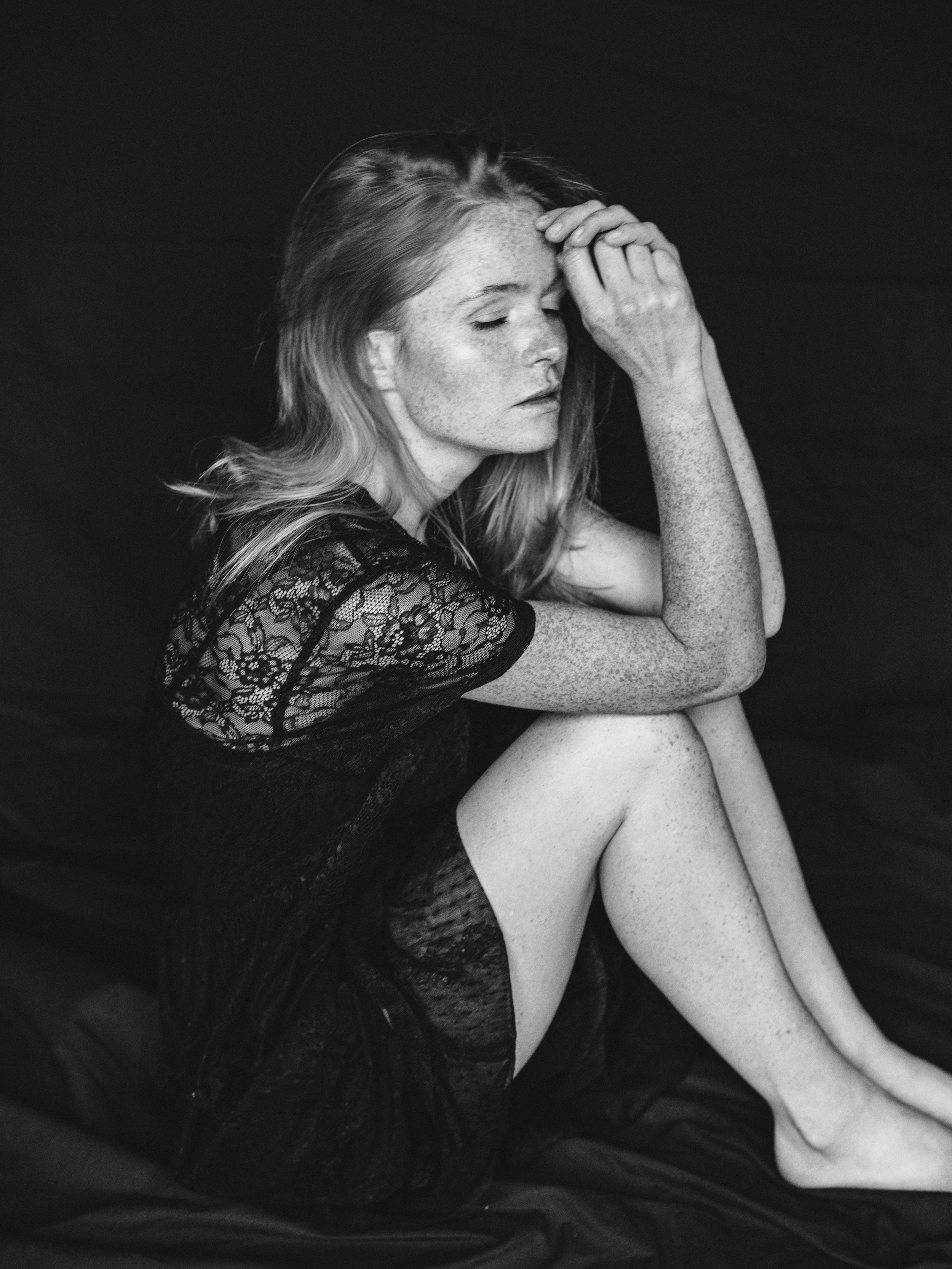
2016
I sit down next to him. Just like I sometimes still do today. In my thoughts. On long car rides. While running. While reflecting. It helps me to sort out my thoughts. To connect with myself. In my own way.
I say:
"You loved shooting here. For years. Always here. You'll continue to do so for a long time to come."
He nods almost imperceptibly, without looking up.
"It's quiet in here," he says. "I can concentrate. There's too much going on outside."
“You can do it,” I say. “And you’re learning to read light right now. That’s good. But don’t forget: light is more than just something that illuminates. Outside, you learned to observe it. In here, it’s confined. It shapes. It draws. Don’t just use it to make something visible—use it to bring out your subject.”
He thinks for a moment.
"First I want to understand faces."
“Yes,” I say. “But don’t wait too long to tell stories. Another face, another face – eventually it’s all been told.”
He remains silent.
“Your motive isn’t the face you show,” I say. “It’s the story you want to tell. The person in it, the protagonist.”
"And I have to go outside for that?" he says.
“Yes, at least from time to time,” I say. “But not just outside the door. Go traveling. Show more. Let the face be part of the story, not its center.”
"And what if it gets messy?"
"Then you'll learn the difference between neat and right. Learn the rules. And then break them."
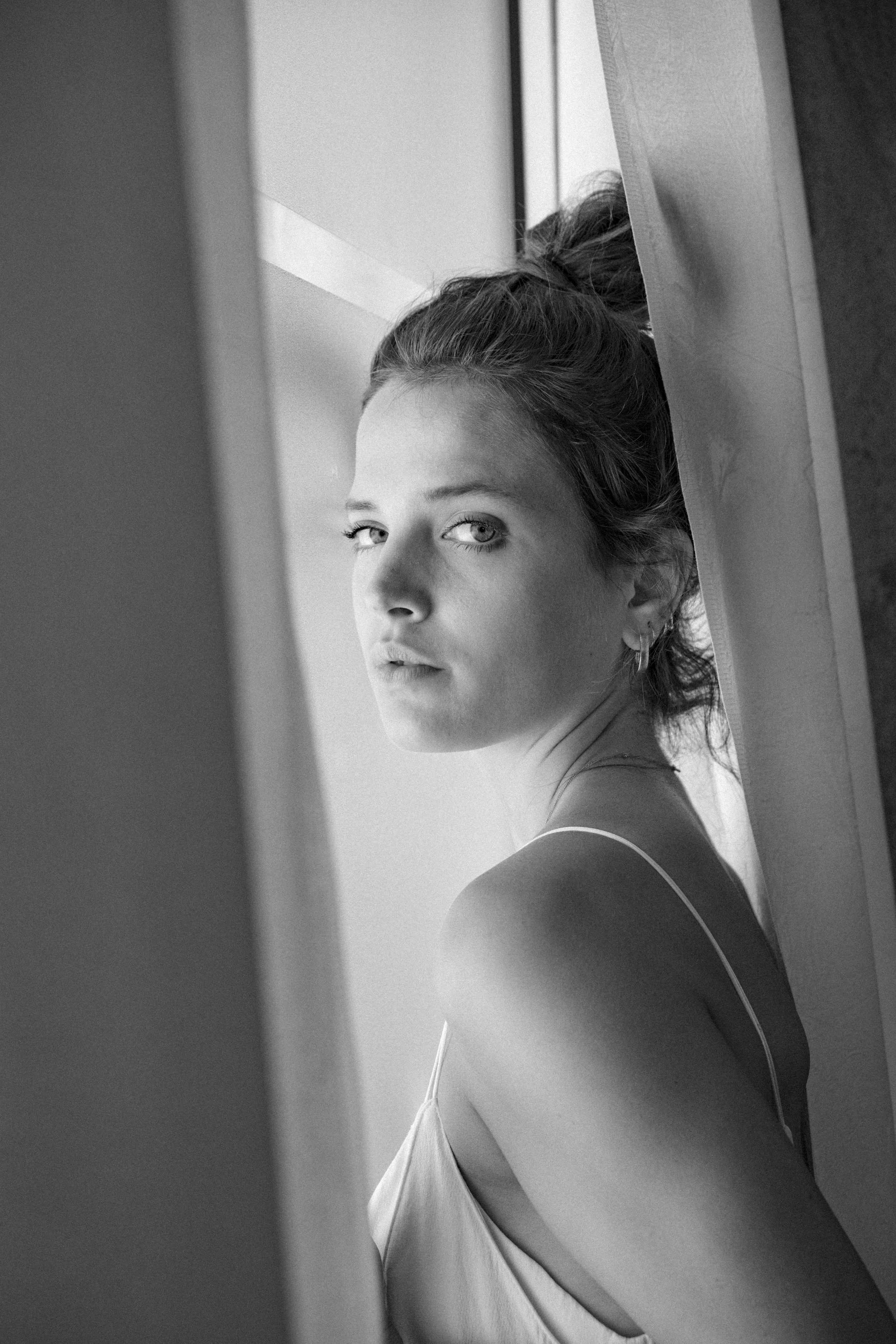
2016
He looks at the camera.
"Sometimes I feel like I take the same picture too often and over and over again."
"Then stop it," I say. "Every person is different. See and photograph them as such."
After a pause, he asks:
"How will I know if I'm getting better?"
“It depends on your honesty,” I say. “Take off the rose-colored glasses. Don’t judge kindly. Judge truthfully. Your development depends on how well you can handle the truth – and what you do with it.”
He takes his smartphone off the table.
"You have to be visible these days," he says.
“Yes,” I say. “But visibility is not a goal. It is a byproduct.”
"Without this, you don't exist at all. I want people to see what I do."
“You get there quickly,” I say. “But you rarely stay. Speed feels like progress. But often it’s just movement.”
He seems thoughtful.
"Don't compare yourself," I say. "You can compete, but don't compare yourself. If you're constantly looking left and right while you're running, you'll lose your rhythm. You don't want to be the same. You want to be yourself."
"And how will I know that?"
"By your fingerprint," I say. "Not by the style. By the trace you leave behind."
After a while he says:
"Sometimes I feel like I carry too much responsibility during the shoot."
“You do too,” I say. “Like in any relationship. Before you can lead someone, you first need a good relationship with yourself and with your work.”
He nods slowly.
“Emotions,” I say, “are your real material. They arise between you and the other person. Not in the technique. Master the relationship first. Then take care of what you hold in your hand.”
He asks:
"And what is all this for?"
“Make it your goal to be significant to others,” I say. “When they see their picture, they should recognize the meaning you had for them in that moment.”
The room falls silent. So does the conversation. I'm back on the train.
Ten years later I know:
Not everything that felt important back then actually was. And some things that started casually have proven to be viable.
It has proven true that photography takes time. Not only to improve, but also to truly understand what you're doing and how things happen between two people. The crucial changes have crept in slowly. Quietly. Often only visible in retrospect.
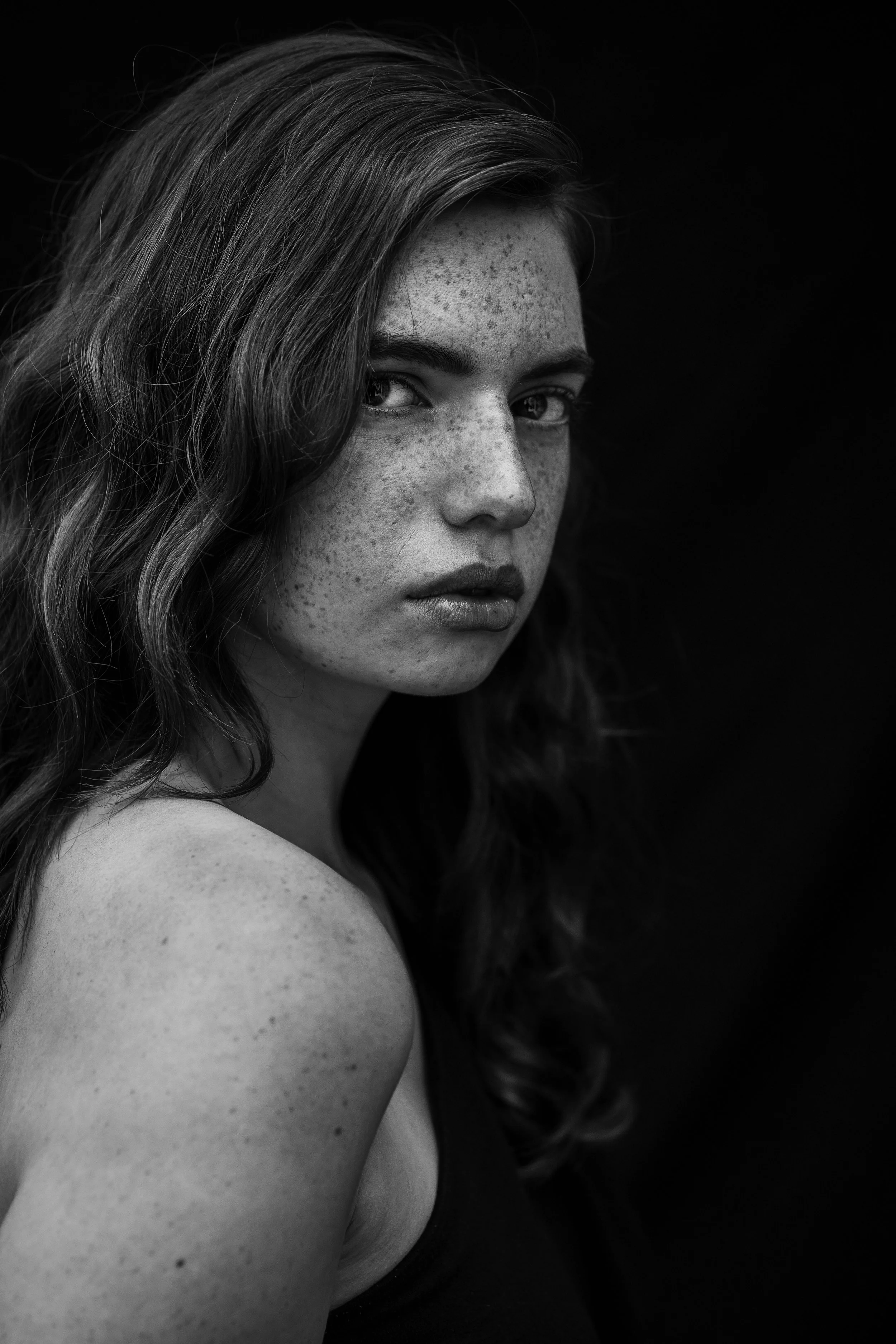
2016
It has also proven true that intimacy has nothing to do with focal length, but rather with relationship. The most powerful images were created where something was allowed to happen – not where everything was controlled.
Many things that used to feel like benchmarks have become less important. Visibility. Pace. Style as a goal. Reactions as confirmation. I've learned that development can be slow. And that some phases need to remain invisible so that something can grow.
Many decisions made back then weren't wrong. They were necessary. Some detours were the way forward. Some mistakes were a prerequisite. Only in retrospect can we distinguish what can stay – and what can be let go.
When I think of my former self today, it's not with a desire to correct it, but with respect. For the patience. For enduring uncertainty. For moving forward.
Because that is the true constant of these ten years:
that photography knows no destination.
Only a continuation.