

Introduction.
There are people you've never met, yet you feel like you've known them for quite some time.
Kim Höhnle is such a person for me.
I don't remember exactly when I first came across her pictures. Sometime around ten years ago, they were simply there. In my Instagram feed, among all the other photographs that one sees daily, glances at briefly, sometimes admires, and mostly forgets again.
I didn't just like her pictures. There was something about them that made me curious about the person who had photographed them.
I wanted to know who this photographer was. What goes on in her mind. How she comes up with such pictures and why she chooses to portray people in this way.
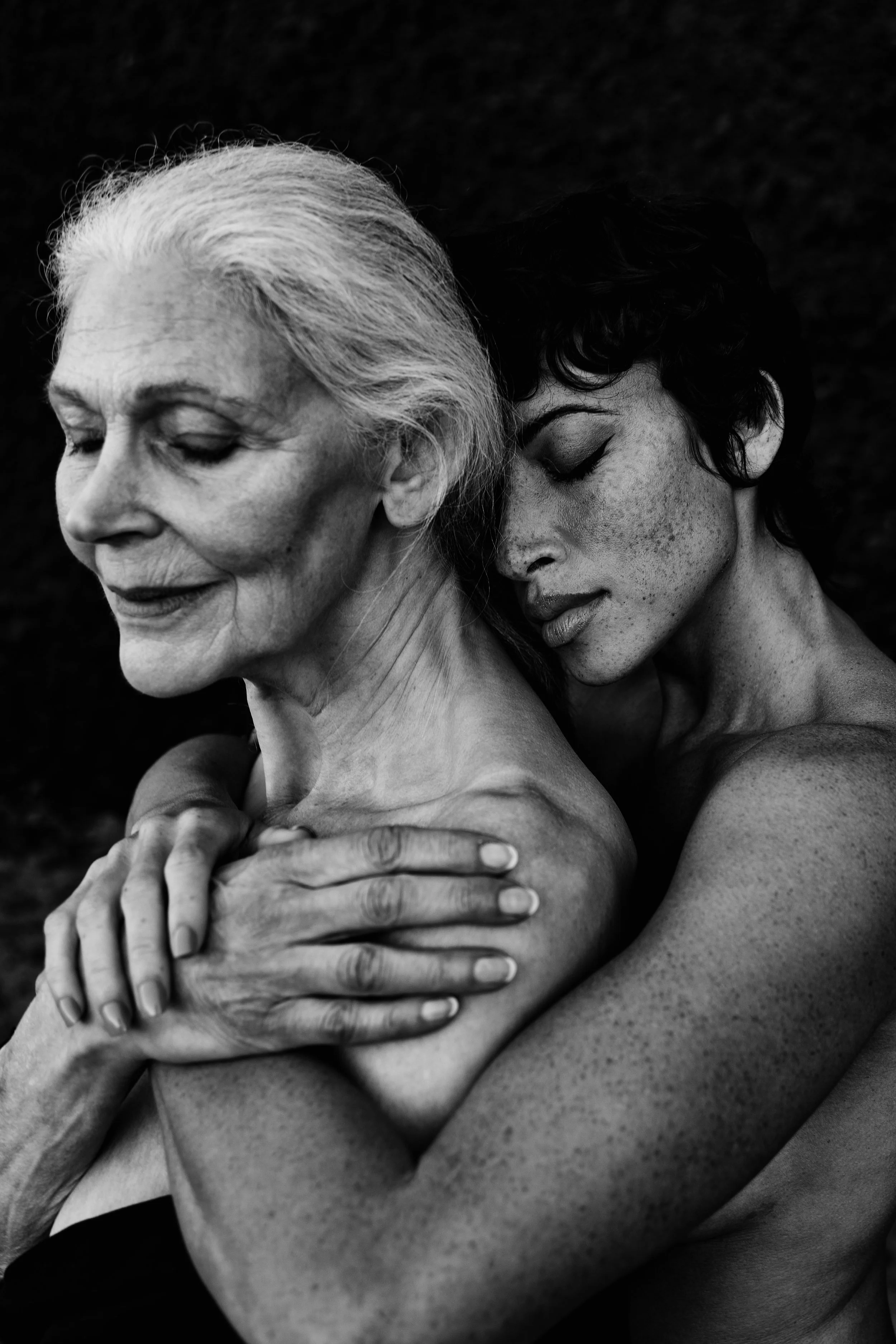
Barbara & Clara
With some portraits, I feel like I'm encountering two people: the person in front of the camera and the person behind it. One reveals themselves, the other shows how they see them. And sometimes, a single image contains an astonishing amount of both.
I felt that way about Kim's photographs from the very beginning.
I looked at the people in her pictures and wondered what Kim had seen in them. What she must have felt during these encounters. What had happened between her and these people before she pressed the shutter.
Her pictures made me curious about her.
We followed each other, commented on each other's work, occasionally exchanged messages, and eventually started sending each other longer voice messages. Over the years, an acquaintance developed that had never actually followed the usual path of getting to know someone.
Kim lives on Lake Constance. I live in Frankfurt. And since neither of us is exactly known for taking every opportunity to meet other photographers at events, our connection remained limited to this peculiar digital proximity.
Until one day I wanted to write about her on my blog and we eventually arranged to meet for a chat.
It was only supposed to be a first meeting. A preliminary chat for an interview I wanted to do with her at some point.
It became much more than that.
A conversation about each other. And from each other.
At some point it became clear that we were already in the thick of it.
It wasn't until near the end that I realized I hadn't written a single line down. Nevertheless, I felt like I still had everything in my head. Immediately after hanging up, I took out my smartphone, opened my notes app, and started writing down everything I could remember.
Here's what became of it.
Proximity and boundaries
We started with a question that initially sounded almost a little strange.
What difference does it make whether a man photographs a woman or a woman photographs a woman?
Of course it makes a difference. But not necessarily the one you might initially expect.
I told Kim about my experiences with female models. About how differently people allow closeness and how far from natural it is for someone to grant another person access to their emotional world. In my case, there's a man behind the camera.
My photography often revolves around precisely this approach.
To capture the moment when someone stops trying to portray something and begins to reveal something about themselves that may not have been planned at all.
Over the years, I've learned to recognize such moments. And I think I've also learned to handle the responsibility that comes with them.
Nevertheless, there are things I cannot know.
I can immerse myself in a person's life, listen attentively, and bring a wealth of experience to the table. I will never fully understand how a particular situation feels for a woman facing a male photographer.
A phone call before the first shoot. An invitation to meet for coffee beforehand. A beautiful location where one can work undisturbed.
What I consider a natural part of getting to know someone carefully might initially raise questions for someone else.
I'm thinking of young women who have little experience in front of the camera. And of the uncertainty that might arise when a middle-aged man suggests getting to know each other personally before the actual shoot.
Or if he books a location where he can work undisturbed, while the other person might prefer a public place for the first meeting.
A woman might bring experiences to such situations that I, as a man, lack. She may know the feeling of having to set a boundary while simultaneously paying attention to how the other person reacts. She knows how quickly a pleasant encounter can turn into an uncomfortable situation. And she may have learned to keep that discomfort to herself initially, so as not to change the mood.
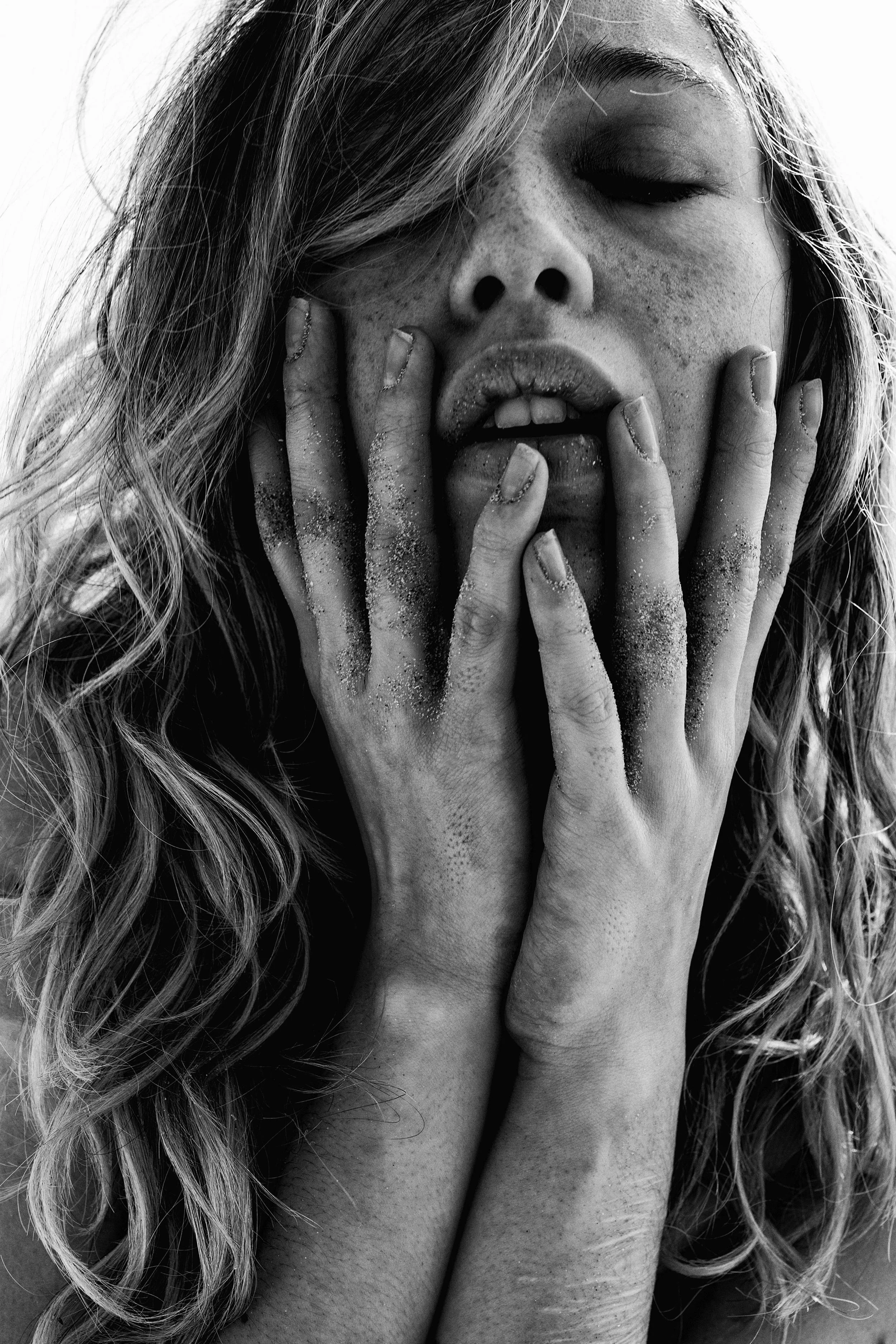
Serena by Kim Höhnle
A female photographer may recognize some of these experiences from her own life. Of course, that doesn't mean every woman automatically understands every other woman. But there is a shared world of experience to which I, as a man, have only limited, if any, access.
I only really understood things like that over the years.
Sometimes it takes quite a while to realize that one's own good intentions do not automatically determine the experience of the other person.
And that trust also means respecting the fact that people want to draw their own line regarding how close they allow someone to get. It makes a big difference whether I respect that line or try to push it.
Kim immediately understood what I was talking about.
We discovered that we look at people from different perspectives, yet we are very close in our ideas about how to treat them.
Eventually she asked me why I so rarely photograph men.
I had to think about it for a moment, although the answer is actually quite clear to me.
I find this particular form of closeness easier with women. I don't mean physical closeness at all.
I think I can open up to women more easily in this particular situation. I become more curious about them, ask different questions, and reveal more of myself. With men, I tend to create a distance more quickly, which I don't even consciously intend.
This is not a judgment. And certainly not a theory about what men or women are like. It's simply something I've learned about myself.
Kim immediately understood what I meant. And somehow I was glad that we didn't have to turn it into a fundamental discussion about men, women, and different kinds of intimacy.
We both laughed.
Sometimes it's simply nice to be able to say something that might sound a little awkward, and the other person still understands exactly what you mean.
Behind the camera
What has fascinated me about Kim's photographs for years is the fact that when I look at her pictures, I also think of her.
To the woman behind the camera.
That doesn't happen to me with many photographers.
One can admire a work of art, its aesthetics, its technical perfection, the idea, or the special moment. And yet, the person who created it remains strangely invisible.
It's different with Kim.
Her paintings tell stories about people and about how she sees them. All in one picture.
There is strength. Physicality. Vulnerability. Courage. Sometimes an intimacy that arises from what one begins to feel while observing.
These are images that leave something open to interpretation yet still make a clear statement.
And I think that's exactly why I eventually became so interested in the person behind these pictures.
Kim studied art. She painted before photography became her primary means of expression. Looking at her work, this path seems almost natural.
I see in her photographs much of what I also associate with painting: the exploration of an idea, a feeling, something that perhaps cannot yet be properly described.
We've found that the term portrait photography doesn't quite describe it. It still sounds too general.
It's a bit like calling someone a novelist. You know roughly what that person does, but you don't really know much about the nature of their stories.
Exceptional Faces & Soul Food
Kim tells me about her beginnings.
From Exceptional Faces, a project from 2013, when, as she says herself, she was still a chick and didn't really know how to operate a camera.
She had already experienced a difficult period of illness at that time. An experience that had changed her view of people, of herself, and of the transience of life.
Photography became a way for her to come to terms with her experiences.
She met people, each of whom brought their own story.
And at some point, she realized that these people gave her much more than she had originally expected.
Soul Food followed in 2015.
Women between 18 and 80 years old. Photographed naked on the beach. Different bodies, ages, and stories.
Kim later exhibited the paintings in her studio at the time.
She tells of the rooms, the long banners hanging from the ceiling, the printed photographs on the tables, the candles, and all the people who had come.
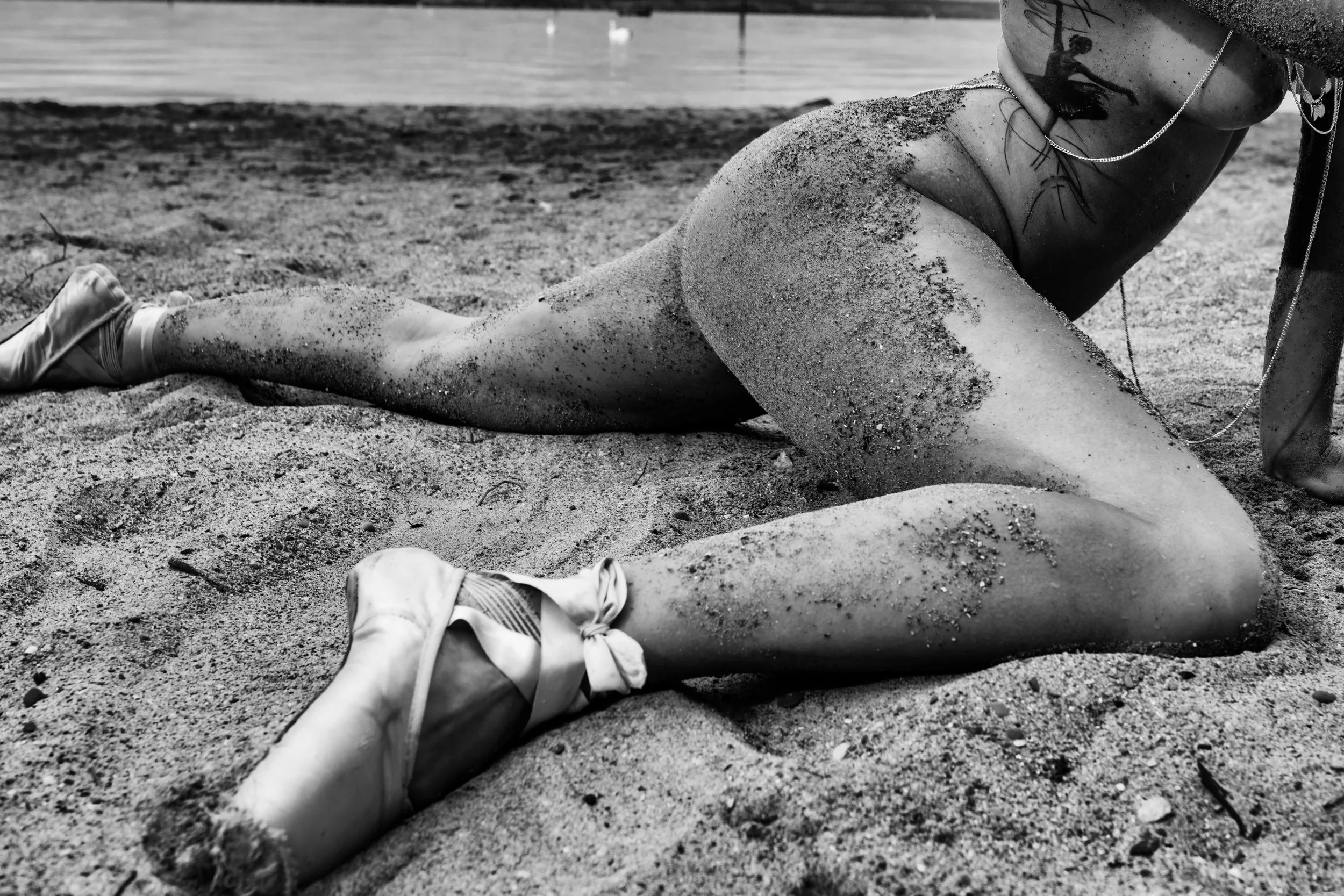
Soulfood by Kim Höhnle
I can imagine that quite well.
A large studio, plenty of space, people walking among the paintings, stopping and talking to each other.
And in the middle of it all are women who recognize themselves in these photographs.
Some started to cry when they saw their pictures.
They had only received a small selection beforehand and did not know exactly which photos Kim had chosen for the exhibition.
"I didn't think I was beautiful enough for you to show me here."
This sentence has particularly stuck with me.
Just imagine that.
A person stands in front of their own picture and is surprised that another person considers them beautiful and special enough to show them publicly.
How much does this say about our ideas of beauty? And how much about the image we have of ourselves?
Kim tells me about the changes these encounters have triggered in individual women. About the decisions they made afterwards. About a different relationship with their own bodies.
One woman joined the German army. Another started wearing skirts for the first time.
And then Kim tells what all of that did to her.
After the exhibition, she went to Berlin and needed two months to herself.
To sort through what I've experienced.
I know that feeling, albeit from different contexts. Sometimes you experience something whose energy expenditure you only feel much later, when the pressure is released.
You take a picture. You have an encounter. You have a conversation.
And at some point, perhaps years later, one realizes that something began right there.
Kim still talks about this project today.
And I believe that a significant part of her current photography originated back then.
Her visual language has changed over the years. Exceptional Faces still contained color photographs. Today, she has long worked exclusively in black and white.
Their understanding of what it means to "see" a person apparently took a decisive direction at that time.
And also about what it can trigger in a person when they feel seen.
The moment
During our conversation, I had developed a fairly accurate idea of how Kim takes photographs.
Probably because I work in a similar way myself. It could also be because her pictures make me feel like I can understand her path to some extent.
I imagined her approaching another person. How an atmosphere slowly develops, eventually reaching a point where both are fully present in the moment.
Anyone who photographs people knows moments like these.
At the beginning, there might be a certain amount of uncertainty. You talk to each other, move around, try things out. Then things slowly change. The person in front of the camera becomes more comfortable with the situation. Attention to one another grows. You react less and less to what you originally intended and more and more to what is happening in the moment.
At some point, this encounter reaches a point where everything comes together.
Sometimes I feel like it's a curve that slowly rises and eventually reaches its peak.
After many photoshoots, the special feeling fades quite quickly. The moment is over, you look at your watch, maybe discuss a few shots, and say goodbye.
When I look at Kim's pictures, I often get the impression that she deals with this climax differently.
It seems to me as if she could linger there longer than others. As if she could accompany the moment for a while longer, give it space, and finally let it fade away very slowly.
Like an airplane gently coming to a landing after a long flight.
I've never actually seen Kim during a photoshoot. This is just my idea of how her pictures are created. Maybe I'm completely wrong.
But I wanted to know how she herself experienced these moments.
I asked her how she deals with this closeness.
Her answer was much simpler than I had expected.
She no longer questions them.
She has learned to accept that she photographs the way she photographs.
That she gets very close to people. That she herself is emotionally involved. That sometimes she gets teary-eyed behind the camera.
And that all of this is allowed.
She tells me about a photoshoot that lasted less than ten minutes.
Then it was over.
Everything that should have been there was there.
She had her pictures.
I had to chuckle at that. I know that feeling. Saying, “That’s it, we have everything.” Being so sure of it.
How often do we photographers spend time trying to create a moment that might not even be possible to create?
We plan, prepare, develop ideas, look for locations and then try to bring it all together in the best possible result.
And sometimes a person sits across from us and gives us something within a few minutes that we could not have created with any amount of preparation.
The trick is probably to recognize that.
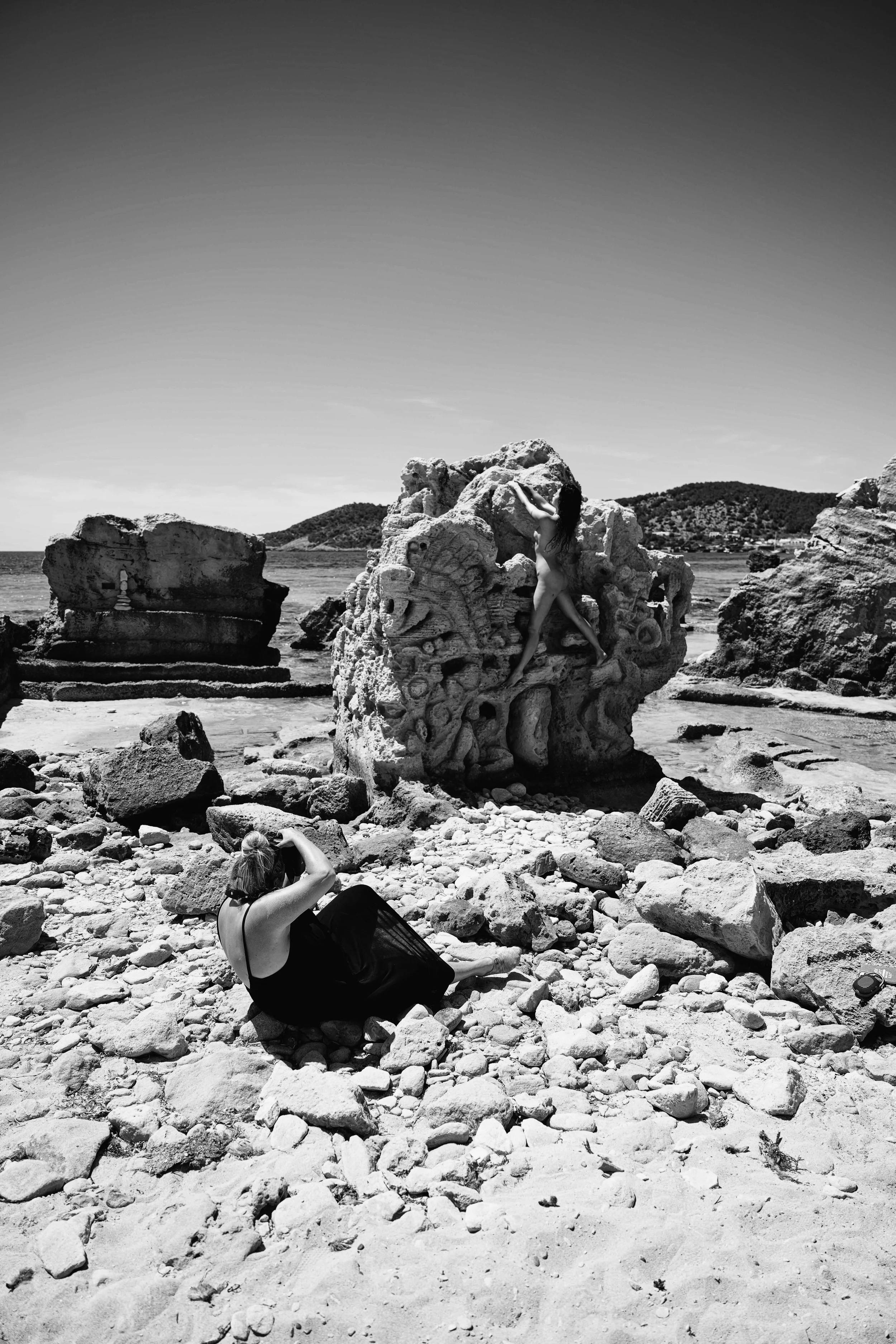
Kim Höhnle at work. By Dana Schöller
Kim also talks about photoshoots where that special intensity doesn't materialize. In those cases, the pictures still turn out beautifully. She's learned to accept that too.
I find this thought quite liberating.
Kim says she photographs with an old, damaged 35mm lens. Sometimes she gets so close to people that she hardly notices it herself. She's practically sitting in their lap while taking the picture.
And sometimes she doesn't even really know what she's seeing through the viewfinder anymore.
Images play in her mind. Thoughts. Music.
It is in motion.
I can well imagine that.
At some point I realized that we had talked about photography for over an hour and I hadn't once asked her which camera she used.
Which focal lengths she uses. How she edits her images. Which software she uses.
None of that.
We both know how a camera works. We appreciate the craft of photography and the people who master it with great effort and almost scientific precision.
For sheer convenience, I rarely travel with more than a camera and a prime lens. And I like being able to move around, react to a situation, and not be too tied to a predetermined point.
Kim seems to think very similarly.
During our conversation, the technical aspects simply weren't particularly interesting.
We apparently had enough other things to discuss.
The world in one's head
Kim and I have something else in common.
We spend a lot of time with ourselves. In our heads.
This might sound a bit strange, considering how much we both communicate via social media, how much we reveal about ourselves, and how naturally we connect with other people there.
But in real life, things sometimes look a little different.
I don't particularly like going to events; especially not to ones where I don't know anyone. Kim feels the same way.
You see the pictures of other photographers, enjoy their work, comment on them enthusiastically, and think how wonderful it would be to meet these people.
And even if you actually had the opportunity, you'd rather stay home.
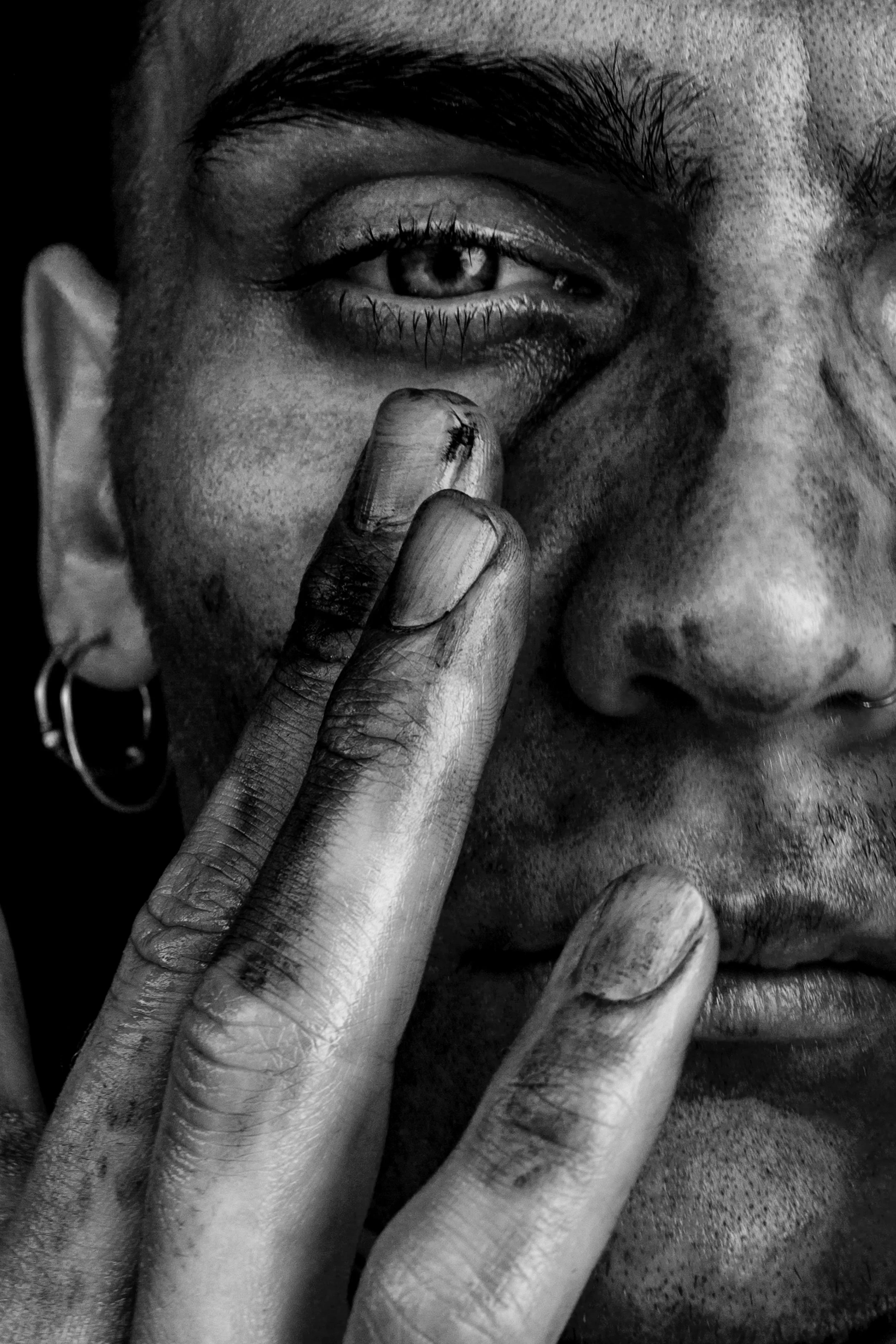
David by Kim Höhnle
Or you go there and it takes forever before you can join someone.
We both had to laugh about it.
Especially the prospect of getting drawn into a lengthy discussion about camera technology at a photographers' meeting.
We would probably both have disappeared again pretty quickly.
We certainly appreciate people who are deeply involved in their craft. We admire photographers who master light down to the smallest detail and, with great effort, create images that would otherwise be virtually impossible.
But that's simply not how we work.
We prefer to feel our way.
Kim says that for about two years now she has consciously tried to take more time for herself.
She runs. She likes being on or in the water. And she spends a lot of time in nature.
She needs exercise and being outdoors to clear her head.
At the same time, she loves art, culture, and city life. She lives near Friedrichshafen and enjoys occasionally getting back into the big city atmosphere.
I had asked her where she actually is when she is completely at peace with herself.
If she is not a mother, not a photographer, not working, and nobody wants anything from her.
She was initially unable to give me a definitive answer.
The question preoccupied her.
And I found that much more interesting than a quick answer.
Because she also told me that she feels closer to herself today than ever before.
I had to think about how much time we actually spend figuring out who we are.
How much that changes over the course of a lifetime.
And how strange it sometimes is that you can tell another person things about yourself that you only become aware of yourself while telling the story.
That's exactly what I experienced with Kim several times during our conversation.
Peter Lindbergh
Eventually we started talking about him.
I already knew that Kim had a special connection to his work. When I later asked her which people or experiences had shaped her own view of the world, she told me again in detail about an exhibition in Brussels.
Untold Stories.
An exhibition that Lindbergh himself conceived and for which he personally selected his works. It was shown in various European cities after his death, including Brussels.
Kim had the opportunity to visit the exhibition together with a group of female photographers, guided by Stefan Rappo, who had worked closely with Peter Lindbergh for many years.
Stefan told stories about Peter. About the paintings, about encounters, and about things that an ordinary exhibition visitor would probably never have learned.
Kim remembers a sunflower. A street sign. A buffalo. An old house.
And photographs where even Stefan sometimes had no definitive answer as to why Peter had chosen them.
Her story made me think of the many people who associate Peter Lindbergh primarily with his iconic photographs of the great supermodels and countless other celebrities.
And then suddenly you're standing in front of a sunflower.
Kim tells me how much these pictures have affected her. How she tried to understand why Peter had chosen these particular photographs and arranged them in this way.
At some point, she got the feeling that she was seeing something very personal from him.
Something that she also connected with his awareness of his own mortality.
She had the feeling that Peter wanted to show something of himself again with this exhibition.
As she tells me about it, her voice repeatedly becomes almost brittle.
She needs to collect herself. To think.
Over FaceTime, I see her glancing past me into the room in front of her. For a moment, she seems to be there again. In the exhibition. Among the paintings and the memories she's just sharing with me.
I'll let them speak.
She tells of the large screen where the supermodels are talking about Peter. Of Stefan's voice, which is suddenly heard while he is standing right next to them.
From the pictures, the stories, and the hours they spent together in this exhibition.
And finally, from a terrace high above Brussels.
At some point she stood there, smoking a cigarette and trying to process everything.
I can easily imagine this scene.
Kim had spent hours looking at Lindberg's pictures. The photographs alone were no longer enough for her. She began to wonder who the person behind them had been. What he had seen. Why he had chosen these particular images. What part of himself was reflected in them.
The freedom to trust one's own vision.
To let oneself be guided by one's own feelings.
A sunflower. A street sign. A buffalo. An old house.
Taking pictures whose meaning might only become clear later. Sometimes only to oneself.
These particular images seemed to preoccupy her. Presumably, this was also because she was suddenly no longer just looking at what Peter Lindbergh had photographed. She was searching for him within them.
And while Kim is telling me about it, I realize that I've been doing something very similar with her pictures for years.
Stefan later said that intensively studying Peter's work had been a form of healing for him.
This thought has particularly stuck with me.
I couldn't help thinking about Kim's own story. About her early projects and how much her encounters with other people had changed her.
And what she had told me about her photography.
She is no longer afraid of becoming visible in her pictures. She no longer constantly questions why she photographs in a certain way. And she feels closer to herself than ever before.
The encounter with Peter's work had apparently confirmed something she herself had learned over the years.
She can trust her own judgment.
She is allowed to take pictures whose meaning might not be obvious to everyone.
And she is allowed to leave something of herself in these pictures.
I believe that Kim has been doing exactly that for many years.
As I listen to her and see how much this memory still moves her, I think again of the pictures through which I got to know her.
I've often wondered how much of Kim herself is in them.
That afternoon I received a rather personal answer to that.
See
One story that Kim later told me in a voice message particularly stayed with me.
She had photographed a young woman.
Eventually, another photographer commented on the scars on her arms and legs.
Kim initially had no understanding what was being talked about.
She had not consciously noticed these scars during the photoshoot.
And when she later looked at her own pictures, she was surprised herself.
The scars were there. But during their encounter, they apparently played no role whatsoever for Kim.
She had seen the young woman.
The people.
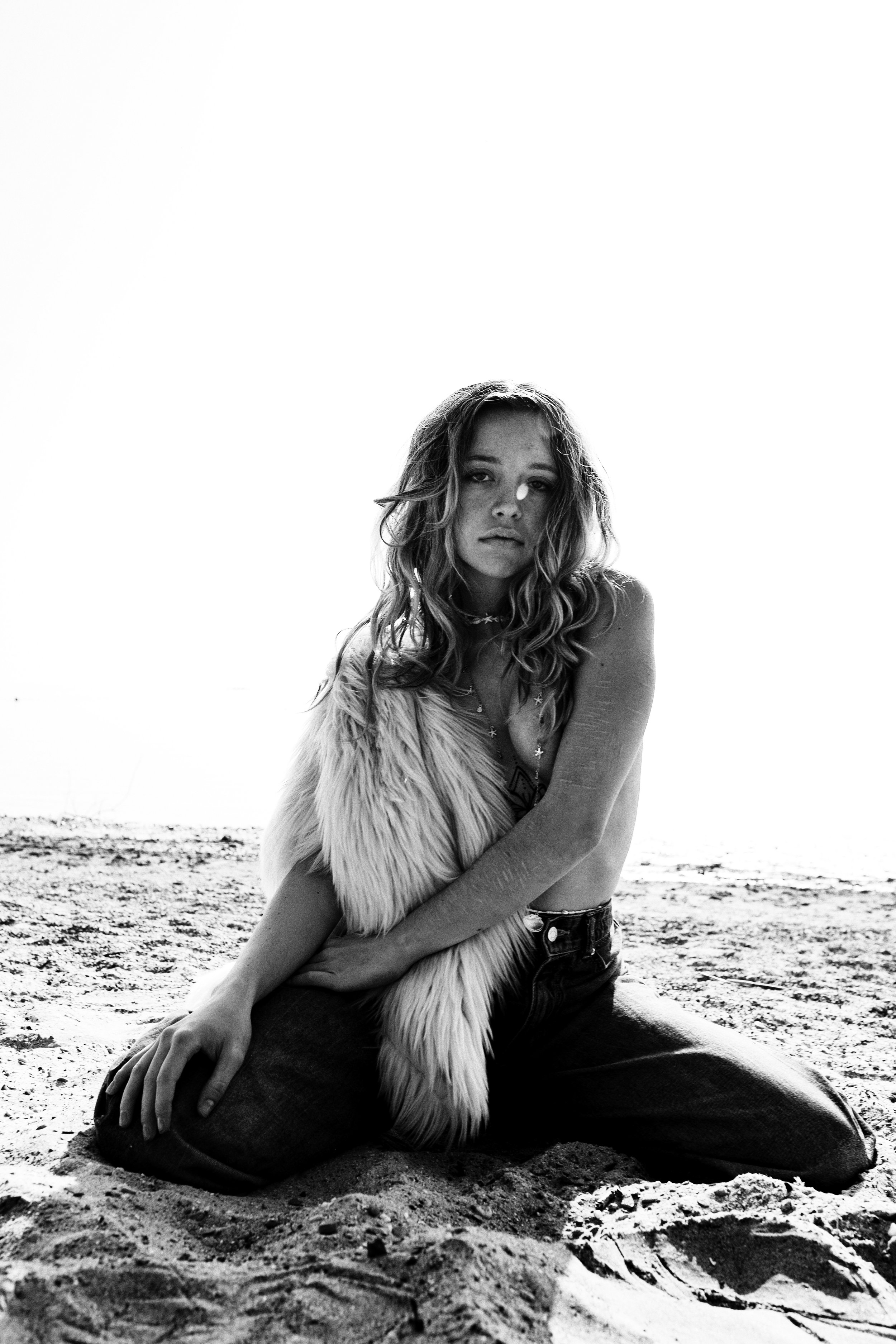
Serena
And not first the marks that this person bore on his body.
I've thought about this story for a long time.
We all see people through the lens of our own experiences, expectations, and perceptions.
We perceive things because we have learned to pay attention to them. And we overlook others because they have no particular significance for us.
Therefore, for me, this story tells at least as much about Kim as about the young woman who photographed her.
Kim says she likes scars. Wrinkles. Bodies that have lived. People who bring their own story.
The whole human package, as she calls it.
And I had to think about her pictures again.
To this special mix of physicality, vulnerability, and strength.
To people who are allowed to show themselves as they are.
And to a photographer who apparently knows very well why she wants to get so close to them.
Pictures and words
We also talked about writing.
About why we both sometimes feel the need to add something to our photographs.
A picture doesn't really need explaining.
But sometimes a picture contains so much of what happened before it that it would be a shame if none of it survived.
One hundred people can look at the same picture and see one hundred different things in it.
And yet, sometimes there's something you'd like to add about it yourself.
I told Kim how I got into writing.
My mother died 22 years ago.
At the time, I was so overwhelmed by it that I eventually started writing down my thoughts.
I didn't know what to do with what was going on inside me.
I wanted to hold onto something. So that I could hold onto it myself. To sort things out. To understand what had actually happened to me.
This text still exists.
And I revisit it about once a year.
I change something. I add something. I delete something. Sometimes I suddenly understand a thought differently than I did a year ago.
It's a bit like a painting that you keep working on.
You add something. You paint over something else.
And at some point you realize that you haven't just changed the text.
You yourself have become a different person in the meantime.
I believe that Kim understands very well what I mean by that.
She also accompanies her photographic work with texts. Her books and projects are an expression of an exploration that extends beyond the moment of taking the photograph.
She deals with what she has experienced, with the people she has met, and with what remains within her.
Sometimes it just takes a very long time to truly understand something.
And sometimes you need pictures and words for that.
And at some point we'll have a coffee.
After our conversation, I sat there for a while and thought about everything we had actually discussed.
About photography. About people. About intimacy. About writing and art. About our difficulties in approaching others, and about how easy it sometimes is for us to get very close to the person behind the camera.
And about Kim.
About a woman whose paintings I have admired for years and whom I felt I understood much better after this conversation.
Later, as I tried to sort out my thoughts about our conversation, I realized that I had actually known Kim in a very special way for years.
Through her paintings.
I always perceived something of the woman who photographed these people in them as well. Her curiosity, her closeness to them, her way of seeing them.
After our conversation, I think I understand a little better what has preoccupied me about it for so long.
We still haven't had a coffee together, by the way.
We should make up for that sometime.
Ideally somewhere where there aren't too many photographers around.
Otherwise, we'll end up having to talk about cameras.
