

Method Notes No. 9: Before it was called “analog”
There are activities that change technologically faster than our relationship to them can adapt.
Photography is one of them.
While cameras became ever more precise, faster, more reliable, and more all-knowing, one question remained remarkably constant:
What actually happens between seeing and triggering the shutter?
Long before I had the words for it, the question was already there.
And long before photography was called "analog," it was simply a state of being for me.
Perhaps it's simply due to my generation.
I experienced photography in its analog form, though it wasn't called that. It was simply photography. Like listening to music without calling it "analog." You put on a record, later a cassette, eventually a CD. The word "digital" sounded futuristic, like the future, not like everyday life. Frankly, I lived in a world where no one even knew what use something digital could possibly have in everyday life.
And I still vividly remember the smell of chemicals. Developer. Fixer. Actually, more the mix of those smells. Seventh grade, photography club. A room in the basement that gave me that special feeling back then, when the lights changed and it got dark. If you wanted to see what you'd photographed, you had to develop the film. Period. That wasn't considered art, not a conscious act of slowing down. Nothing was read into it. It was simply a necessary part of the process.
Looking back, it's strange how little importance we attach to things as long as they're ordinary. Until I was about 26, I photographed on film. Always for a special occasion. Not for casual photoshoots, as they say today. Travels, people in life, at parties and events. On rock faces and ice fields in the mountains.
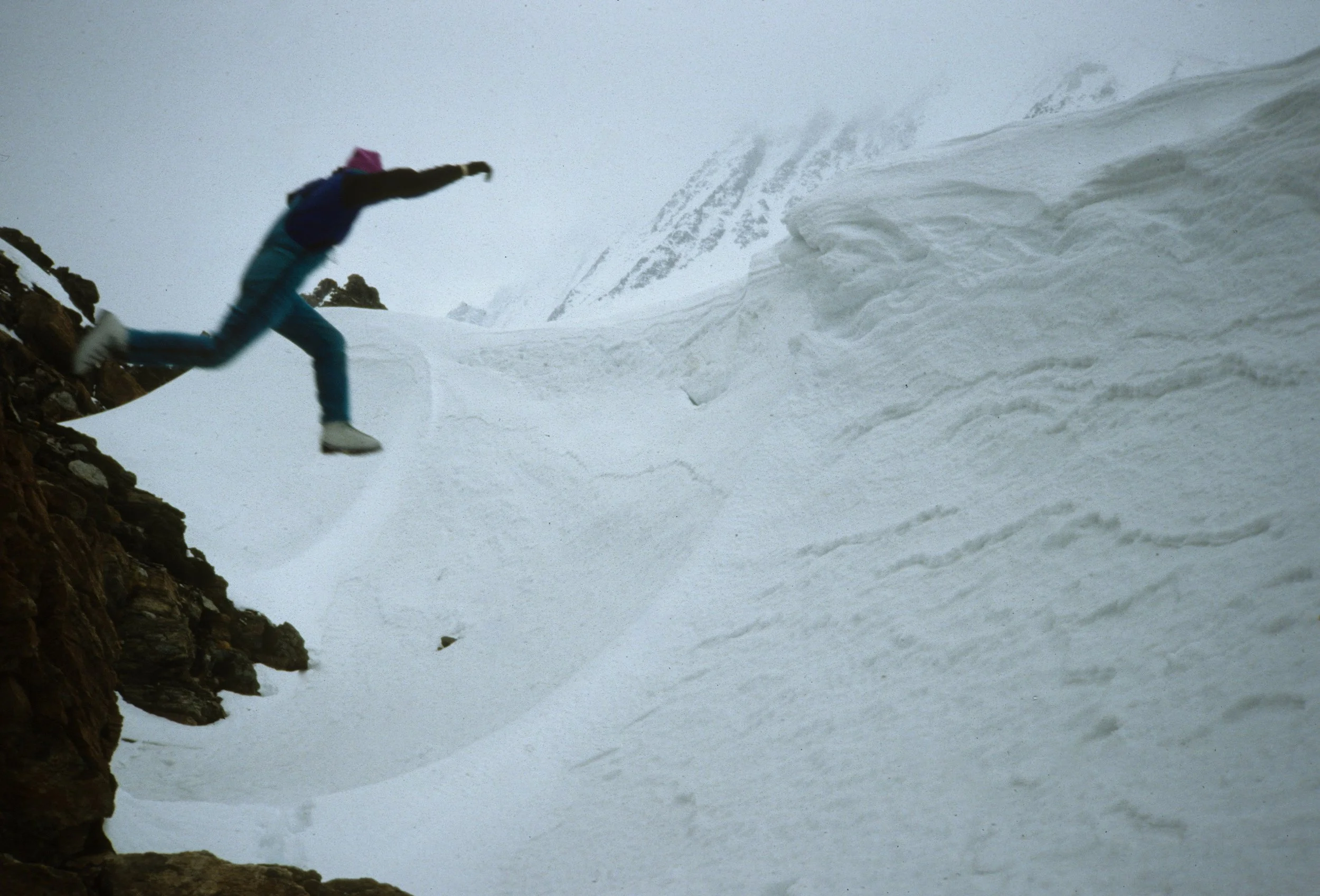
Mt Blanc Massif, 1992
The break
Much later, after a long break, I got back into photography – and landed right in the middle of the digital world. Everything had changed.
Initially, I was busy understanding the technology and software, and the possibilities it offered: sharpness, resolution, pixels, mastering and optimizing them. I wanted to know the limits of what was possible, how much control one could have. Image editing—and something really exciting: looks.
Only after some time had passed did I realize that I was missing something. Not immediately, and not consciously. More like a slight unease that only becomes noticeable when you listen to your inner voice for a long time.
Or like with music.
I enjoy playing records, even though it's cumbersome. Every fifteen to twenty minutes you have to get up, flip the record, and reposition the tonearm. And yet, I sit there next to my stereo system, holding the cover, the booklet, the lyrics. Every movement is the same – and yet it's never routine.
I also enjoy writing by hand and live in notebooks.
I write postcards from hotels, short letters, notes whenever someone comes to mind – in a café, at a bar, in my room, or on the train.
This has nothing to do with nostalgia – but with attention.
Analogous as a space for thought
That's probably why it took me so long to talk explicitly about analog photography, because I was never concerned with the material.
For me, shooting with film is more of a mental space.
Not a technical one, but also not a photographic one in the strictest sense. Rather, one in which something shifts in my mind. Or switches gears.
What happens before the shutter is released if there are only thirty-six exposures in the film?
Nothing, really, because of course there's more film. Of course, rationally speaking, this isn't a real limitation. And yet, it's there as soon as the film is loaded.
I am always amazed at how long it takes to take these thirty-six photographs.
The connection between intention and trigger persists longer.
The gaze lingers longer.
The connection to the subject, the person, the moment is not immediately severed.
Everything takes longer. And as a result, everything becomes a little deeper.
I look for longer – and therefore I'm better able to overlook what doesn't need to be in the picture.
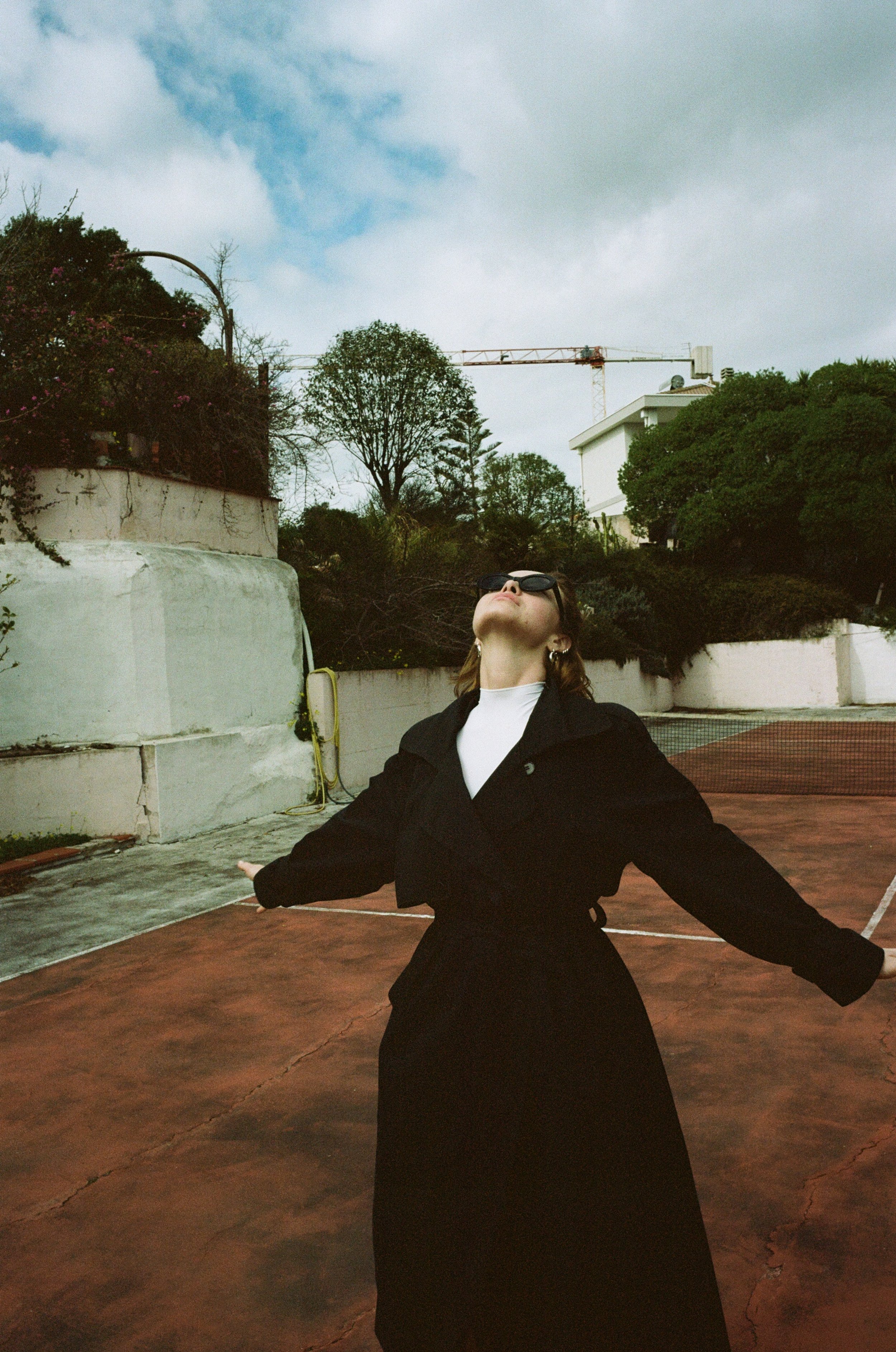
Victoria, Sardinia 2024
Ignorance and decision
A significant part of it is not knowing.
Only seeing later what you photographed. Whether you even got anything. Whether it worked.
Digital technology gives me immediate feedback. Analog technology gives me none.
I have to live with the decision I made at the moment I triggered it.
Especially in terms of time.
And this shift changes more than one might initially think. Therefore, I don't shoot analog simply for the look.
Areas of tension
I'm less interested in the systems themselves than in the tensions between them. This applies to many topics. But the tensions between digital and analog photography are particularly palpable.
Digital perfection contrasts with human imprecision.
Control versus letting go.
The possibility of optimizing acceptance.
For me, the analog is not a counter-proposal in the sense of a statement. It is a corrective. A counterweight. Something that helps to return to a kind of foundation.
I enjoy watching old films and TV series, especially from the eighties. Not because I don't like new series, but as a way to ground myself. As a reminder of what time felt like before everything was constantly available, editable, and accelerated.
Attention and duration
Wim Wenders once said, in essence, that what interests him about photography is less the image itself than the attention that precedes it.
The perseverance in a place.
The lingering until something begins to reveal itself.
Many of his photographs appear unspectacular. Empty streets, facades, landscapes devoid of events. And yet they are dense. Because rarely does anything happen in them – and because nothing is forced.
For Wenders, photography becomes a form of waiting.
A decision not to move on immediately.
For me, this is where it has a strong connection to analog photography.
Because of the time it requires, and not because of the material.
Analog photography forces me to "stay" longer.
With seeing.
With deciding.
With the moment before something is captured.
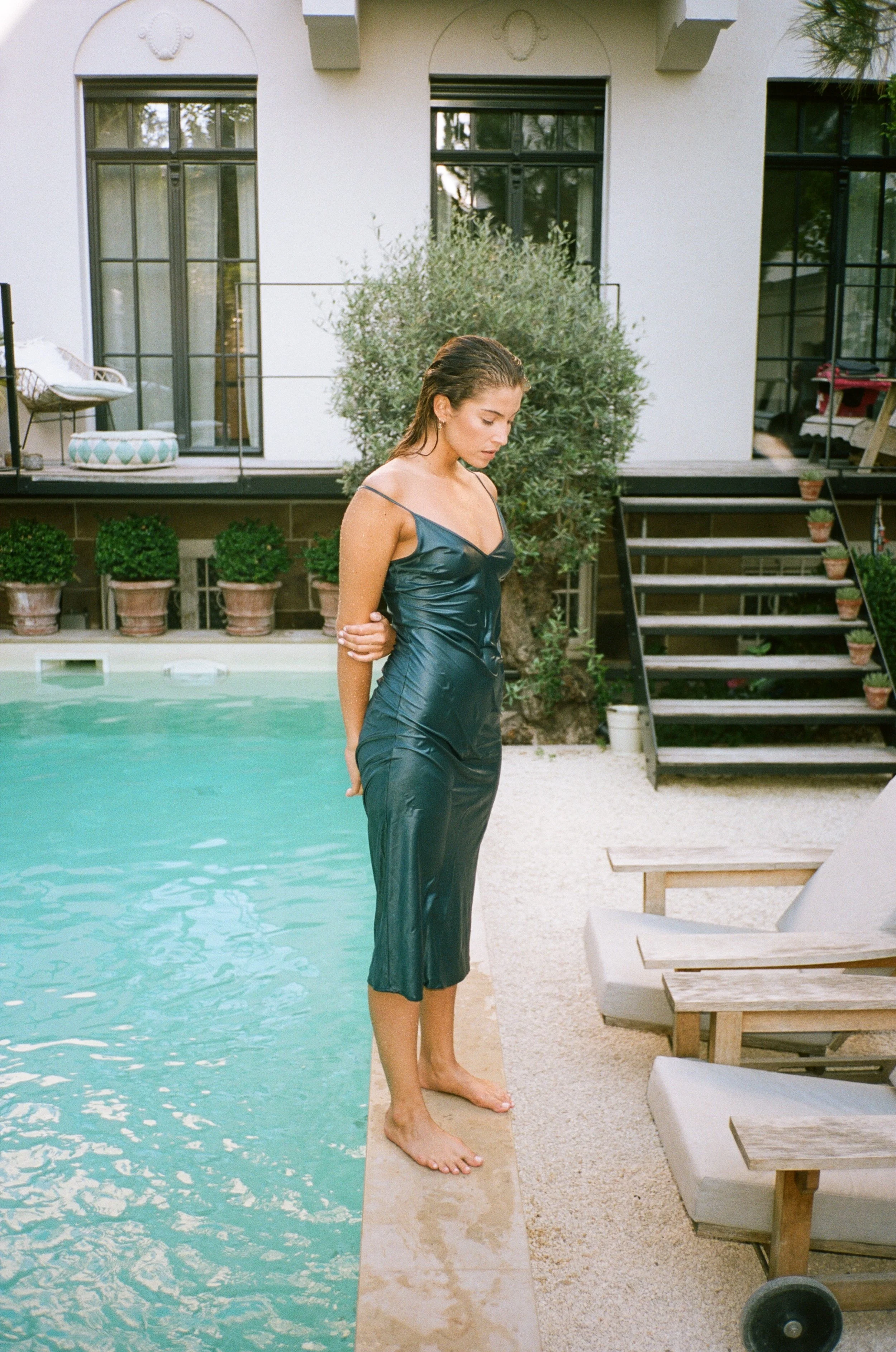
Perinne, 2022
The Paradox of Authenticity
Interestingly, the digital image is objectively closer to reality.
It is sharper, more precise, more accurate.
And yet, we often perceive the analog image as "more real".
Often, it's the opposite:
it's further removed from what actually came before us.
But it's closer to what we wanted to feel.
To what we perceived at the moment of taking the photograph.
To the memory, not the image.
For me, photography – like many other things – is less about how something was, but more about how it felt.
No dogma
I don't take many analog photos.
I mostly listen to digital music.
I work digitally.
But when I insert a film, this act takes on a weight.
Like picking up a tool. Like a paintbrush.
It's a conscious decision to turn off speed.
Not to insist on the guarantee that one of the many pictures will be good.
Interestingly, I sometimes get this feeling with an old digital camera that's almost twenty years old. So it's not just about chemistry or materials.
It's about deciding not to want everything immediately.
Not to feel the need to control everything.
Not to have endless options and opportunities.
And not to optimize everything just because it's possible.
I believe that's also why photographs created over time stay with us longer.
Because they give us time.
The real reason why analog photography plays such an important role for me is not the retrospective aspect.
But the memory of why I started in the first place.