

Method Notes No. 10: The common thread, or - Why I don't want to stay "true to my style"
Recently, after a shoot in Italy, I was sitting with another photographer. A well-known name. One of those who's been shooting film and fashion for years, in high demand, with big clients, a stable presence. We talked about pictures, about the light in Italy, about people—and then the conversation took a different turn.
He explained that something had changed in the landscape around him. Magazines and labels were booking him less frequently. Editorials were featuring visual styles that were distinctly different from what people had associated with him for years. He said perhaps he should have "turned the camera more often" earlier. Perhaps he should have been more active on social media. Perhaps he should have refined his technique even further, optimized it even more, "perfected" it even more. He related everything to his working style.
I understood and felt what he meant. This mixture of pride and doubt. The feeling of having built something up over years – and suddenly no longer being sure if it was viable.
And I replied with something he probably hadn't expected: that I didn't think he was missing a few technical tweaks. Not more precision. Not more control. But rather the opposite: movement. A change of perspective. A different relationship to risk. That he had to make change a part of his own work.
Some time later, I had a similar conversation—only from a different perspective. With a model I greatly admire. Someone with a very distinctive look, in high demand for years, booked for workshops, promotions, and her first campaigns. For a while, everything seemed stable: her image was easily recognizable, her visuals promising, and the role she was seen in clearly defined. And then something happened that, in retrospect, could almost be described as a pattern: she never made the leap. Too little variety. Too much workshop aesthetic, always telling the same story. Her social media presence stagnated. Her own profile—once a strength—became a dead end. Her appeal to brands she would have been a good fit for faded away. And now she's trying to pull herself out of a slump that has less to do with talent than with a missed opportunity for growth.
These two conversations have helped me to sort things out. And they lead directly to what I mean by "common thread".
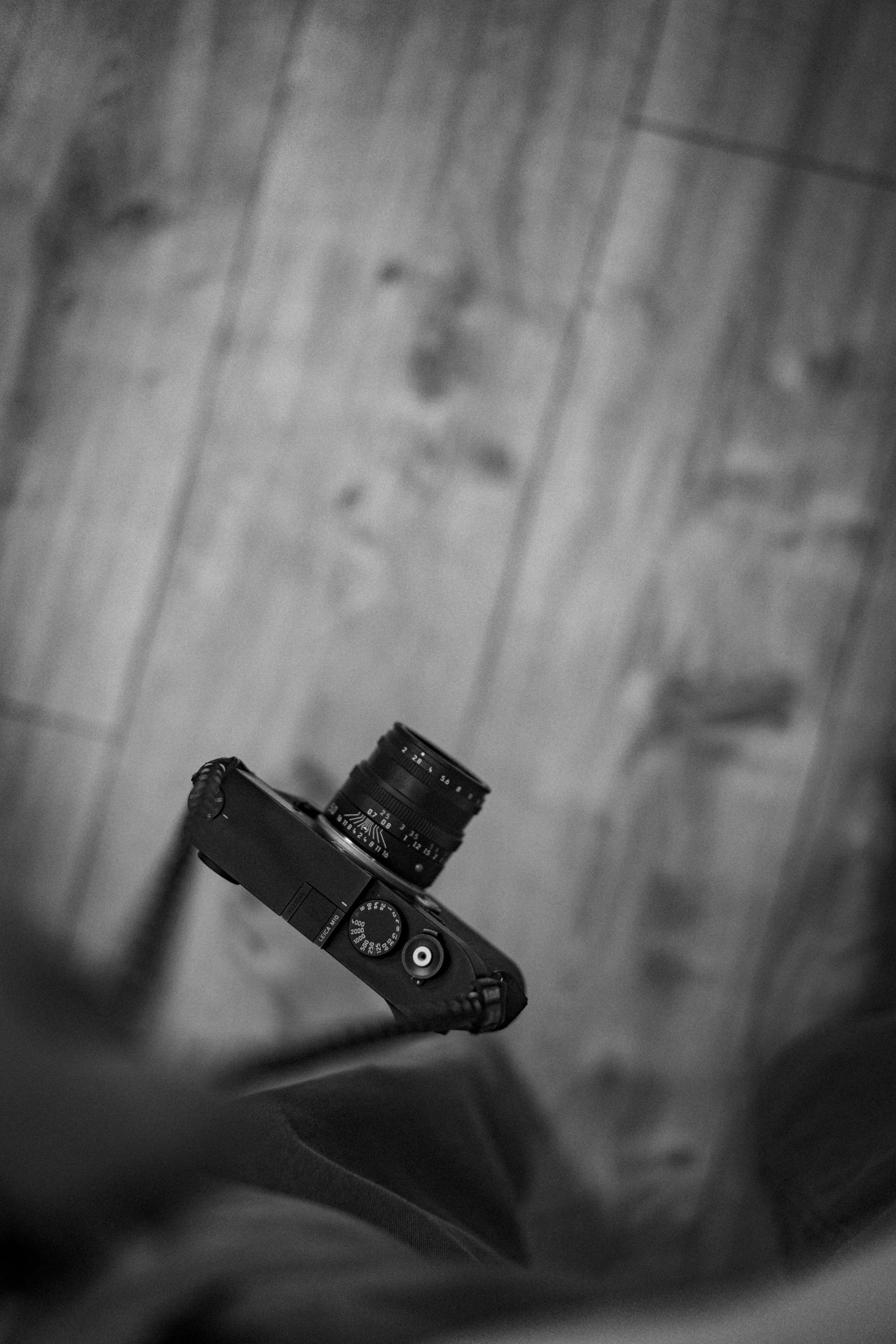
Many look for the common thread where it's easiest to spot: in a recurring look, in the same motifs, in a style that ideally remains unchanged for years. As if photography always had to look the same to be consistent. As if it automatically appears more professional if one "stays true to one's style"—where "true" often simply means "the same.".
I understand where that comes from. Recognition provides security. For the audience, for customers, for platforms, and often for oneself as well. Once you've found something that works, you tend to stick with it. You can refine it, smooth it out, perfect it. You become faster, more efficient – and above all, more experienced. At some point, you realize how this security initially pays off. The environment responds with validation; likes and followers come in. You've made it.
Brand recognition has become a hard currency. Not just in the market, but also in people's minds. A look can be precisely described, sold, and categorized. It makes you "the guy who always...". Evolution, on the other hand, is difficult. Evolution is unsettling. It can't be neatly packaged. And that's why today it's often only acceptable if it doesn't bother anyone—especially not yourself. If it feels like an update and not a change of course.
It is precisely this change of course that keeps a creative process alive.
I often see photographers and artists clinging to a genre, an aesthetic, a theme. Completely shackled to it. Because it provides a sense of security – sometimes even when it no longer truly resonates with them. They know their capabilities. They know how to do it. They know the reactions it elicits. And yes, there is something positive in that: discipline, craftsmanship, repetition as a form of refinement.
But I'd like to pose a question: Is perfection always development? Or is perfection sometimes just a very elegant way of avoiding something?
I observe this as a secret trick in many creative careers. You get better at something you already know. You become more precise, more fluid, more controlled. And you avoid exactly what you can't yet do. What seems awkward. What smells new. What makes you a beginner again. Being a beginner doesn't feel "serious." Being a beginner feels like taking a risk.
And yet, it is often the only place where anything really happens.
When I think about the common thread, I don't mean the visible surface. Not the choice of subject matter. Not the genre. Not the look. For me, this thread lies beneath the surface. It consists of something harder to grasp, but which you immediately sense when you discover it: the way someone works. What they allow. What they absorb. What they process. What they are willing to learn. How they seek inspiration. What perspective they have on people, places, events, and stories. And how this perspective changes over the years without losing its core focus.
When I observe myself, I notice something like this: What I want to convey remains remarkably constant. Only the vessel changes. In some phases, I carry it directly through a person—in the form of a portrait. In other phases, a place takes on this role. Or a city. Or a mood. It's often like this in my photography: At the core of why one wants to photograph in the first place lies what and how one photographs. If I enjoy traveling, I want to show what I see. I want to tell the story. Perhaps not as a report, but as a feeling. But the underlying need remains the same.
What appears to be impulsiveness on the outside is often just a translation on the inside.
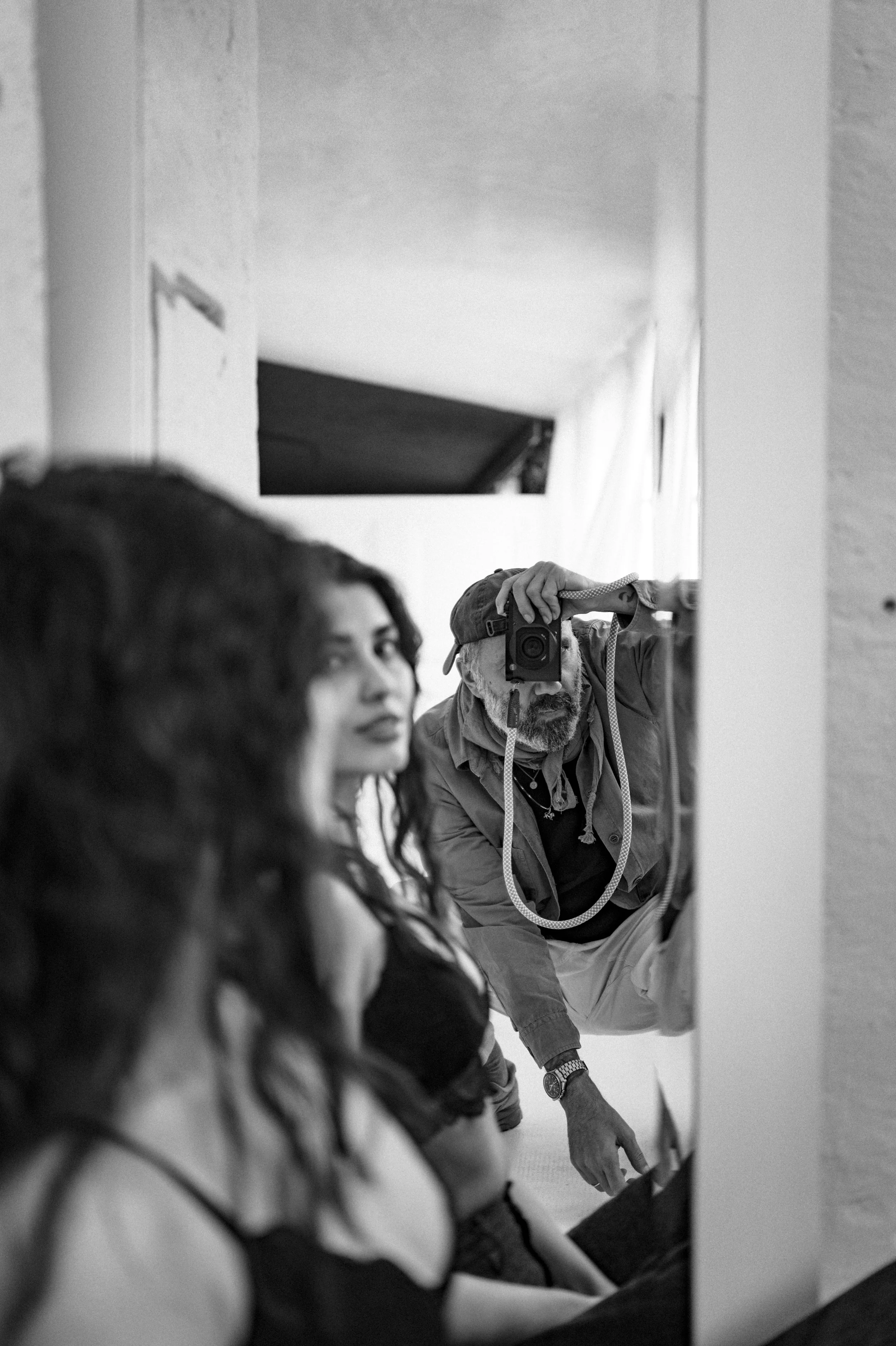
At the same time, this must be distinguished from something else: from "sometimes this, sometimes that," simply because one doesn't want to commit. A consistent theme is not a license for arbitrariness. And change is not a badge one pins on because it sounds good. It's not enough to say, "I'm not afraid of change—and if it's not perfect, all the better." That might sound like self-reflection, but it's often just a convenient excuse not to really concentrate—and not to have to delve deeply into the subject.
For development to be successful, it needs experience and confidence. Not in the sense of "having everything under control," but in the sense of: I know what I'm doing, even when I'm venturing into uncharted territory. I can distinguish between genuine risk and mere anxiety. I can embrace new things without getting lost in the novelty. That takes work. And that takes responsibility.
I know artists who express themselves through music, sometimes through dance, sometimes through singing, sometimes through an instrument. The music remains. The form changes. It's similar in film. Not everyone who wants to tell a story has to be an actor. Some write screenplays. Some direct. Some produce. Sometimes even in succession. This doesn't seem indecisive. It's a choice for a different perspective—perhaps even the only logical one, in order to ultimately be able to tell what needs to be told.
For me, a common thread isn't a nail in the wall. It's not a fixed point meant to prove: Look, I'm always the same. A common thread is something that moves. Sometimes straight. Sometimes in loops. Sometimes with knots. But always in motion. And motion isn't the opposite of clarity. Motion enables clarity because it opens up new perspectives.
Looking back at my own development in photography over the past thirty years—and actually a few more years when I simply snapped away on my first trips—I don't see a straight line. I see backpacking trips. Mountaineering. Adventures. I see family and closest friends sharing moments together. I see portraits. And I see that, compared to many other photographers, I haven't had that many models. Not because I wanted to photograph fewer people, but because I wanted to portray the same people in different ways—instead of producing a large volume of "material" that ultimately looks almost identical.
For me, photography is an attempt to understand the world and engage with it. Changing perspectives, movement, and the medium are fundamental to this. It's an attempt to get closer – or to approach it differently.
And then there are things like my Istanbul project.
If I compare this long-term project to my individual shoots, you might think they're two different worlds. It's different. It challenges me differently. It forces me to start over and learn new things. It's slower, more protracted, deeper. Also riskier. It puts me in situations where I can't just rely on "my usual style," but have to reorient myself. And yes—if I'm honest—that sometimes makes me nervous. Sometimes I get dizzy thinking about how much I still don't know, how many decisions are still open, how many paths I haven't yet explored.
But this very dizziness is an indication that I am moving.
Upon closer inspection, I realize: I'm essentially doing the same thing I've been doing for decades. I just use different means. I no longer sing. I don't dance. I play an instrument. Or I start composing. I'm not on stage. I might be directing. Or I'm writing the script for a play I want to perform. The goal remains the same: to tell a story that feels real. Only the form changes, because the story demands a different narrative style.
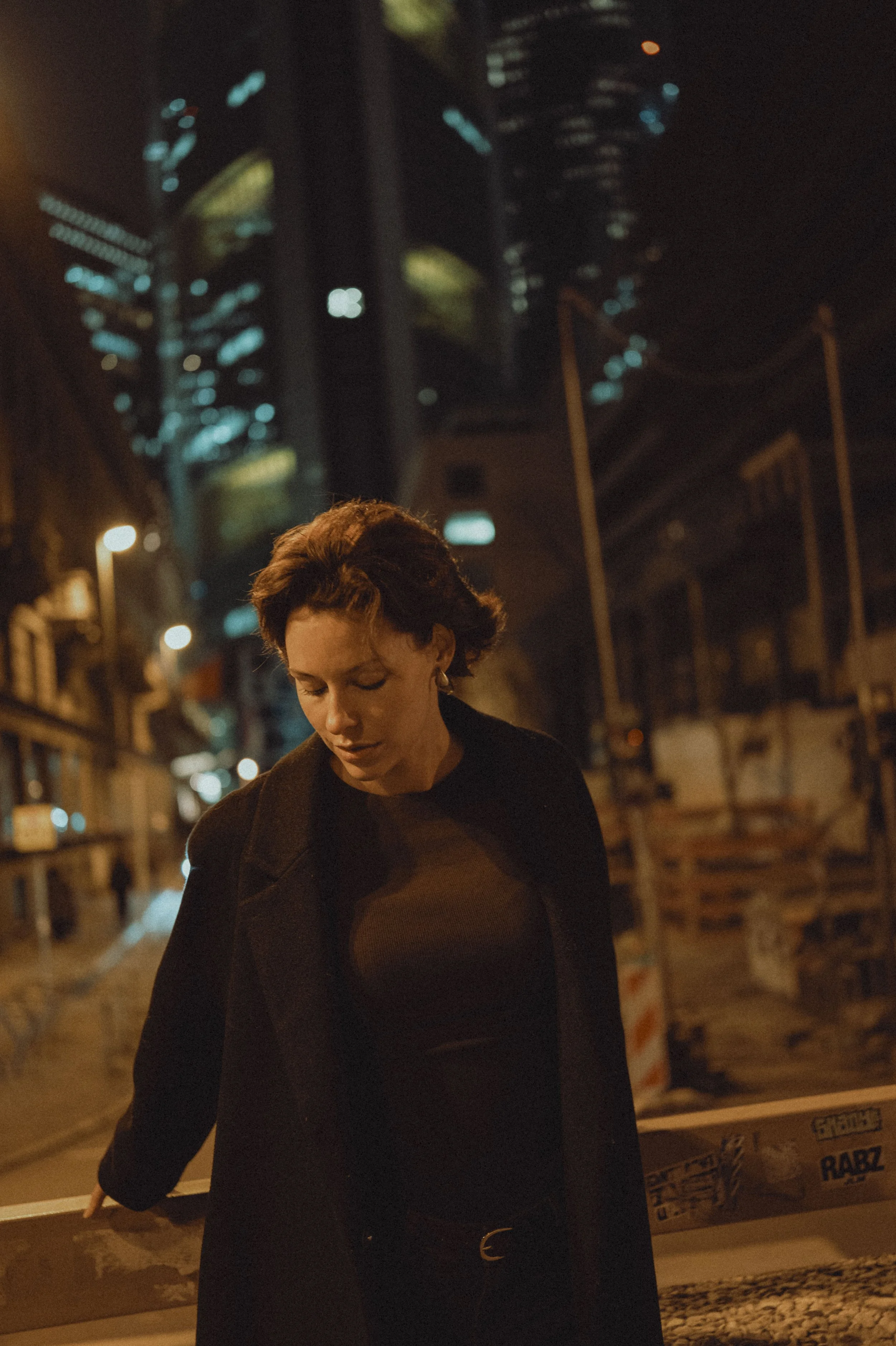
What is often misunderstood is that the common thread is something you have to prove by repeating yourself. But sometimes the common thread is precisely what prevents you from repeating yourself.
Another important point for me: I'm not a fan of loudly proclaiming this. This "Here I am – watch out, here I come" attitude almost makes me physically uncomfortable when I observe it in someone. For me, the common thread isn't what you flaunt outwardly, but the purpose, the reason, the intrinsic benefit of an action – and that can remain completely unobtrusive in the background.
The Billy bookcase inevitably comes to mind. Its simplicity is hard to surpass, its efficiency – supporting books – is hard to beat. It doesn't shout. It doesn't have to prove anything. It fulfills its purpose. And for me, that's a good image: the common thread doesn't have to be loud. It doesn't have to constantly explain itself. It simply has to support – and help ensure that something maintains its direction, even when its form changes.
A new beginning isn't a break. A new beginning is part of change. For many, a new beginning feels like a step backward. And change is quickly perceived as a threat. But it's simply the price of progress. Without change, everything stays in the same room. You might tidy up. You might rearrange furniture. You might paint the wall. But you don't leave the room.
I think that's the crucial point: the common thread isn't the answer to everything. But it's that something I keep returning to – just with different tools in hand. Sometimes with a portrait. Sometimes with a street. Sometimes with a city that behaves like a portrait. And sometimes with the courage to once again not know how it's done.
From the outside, it doesn't always appear coherent and calm, and it's not always easy to categorize. But for me, it's the opposite of impulsiveness. It's consistency. Not simply a change of look.
And if there is such a thing as seriousness in creative work, then perhaps it doesn't lie in remaining true to oneself by staying the same. But rather in remaining true to oneself by allowing oneself to move forward.