

Fragments of Light No. 16: My tenth August - a weekend in Arzbach.
Some things stop because they no longer work.
Others quit because they've had enough.
This August marks my tenth August as a photographer in this genre. Ten years isn't a particularly long time. But for me, it's long enough to see some things differently than before.
I won't be doing some of the free photoshoots in the same way anymore. I won't be doing some portraits this way anymore. I'm leaving certain settings, processes, and ideas behind.
But not because I'm dissatisfied with it.
There are some answers I simply don't need anymore.
Starting over is difficult if you're not at the beginning.
Those who begin have little to lose. They can search, experiment, copy, discard. They can take a wrong turn and go back. No one expects anything specific from them. It hardly matters.
Later on, things are different.
They've taken pictures that have worked. They've developed a style, or at least something that others perceive as such. They know which subjects suit them. They know the light, the situations, the people, the way they work.
You can continue with this for a very long time.
Perhaps even for a lifetime.
Almost exactly ten years ago, I spent a day with Jan in his Intense Coaching session. At the time, I was there with Stefan and another photographer.
I knew Jan back then as Jean Noir.
It was my first truly intensive coaching experience. I've forgotten much of what was discussed that day. But not the crucial points.
Until then, my understanding of photography was largely based on images. I saw something that interested me and wanted to make a good photograph of it. People, situations, light, places. Searching for subjects.
That day I realized for the first time that there are different ways to think about photography.
About an idea before the image.
On meaning.
About what one actually wants to tell or record.
And about the fact that craftsmanship only serves to make these things visible.
Jean Noir eventually became Jan. And Jan became a good friend.
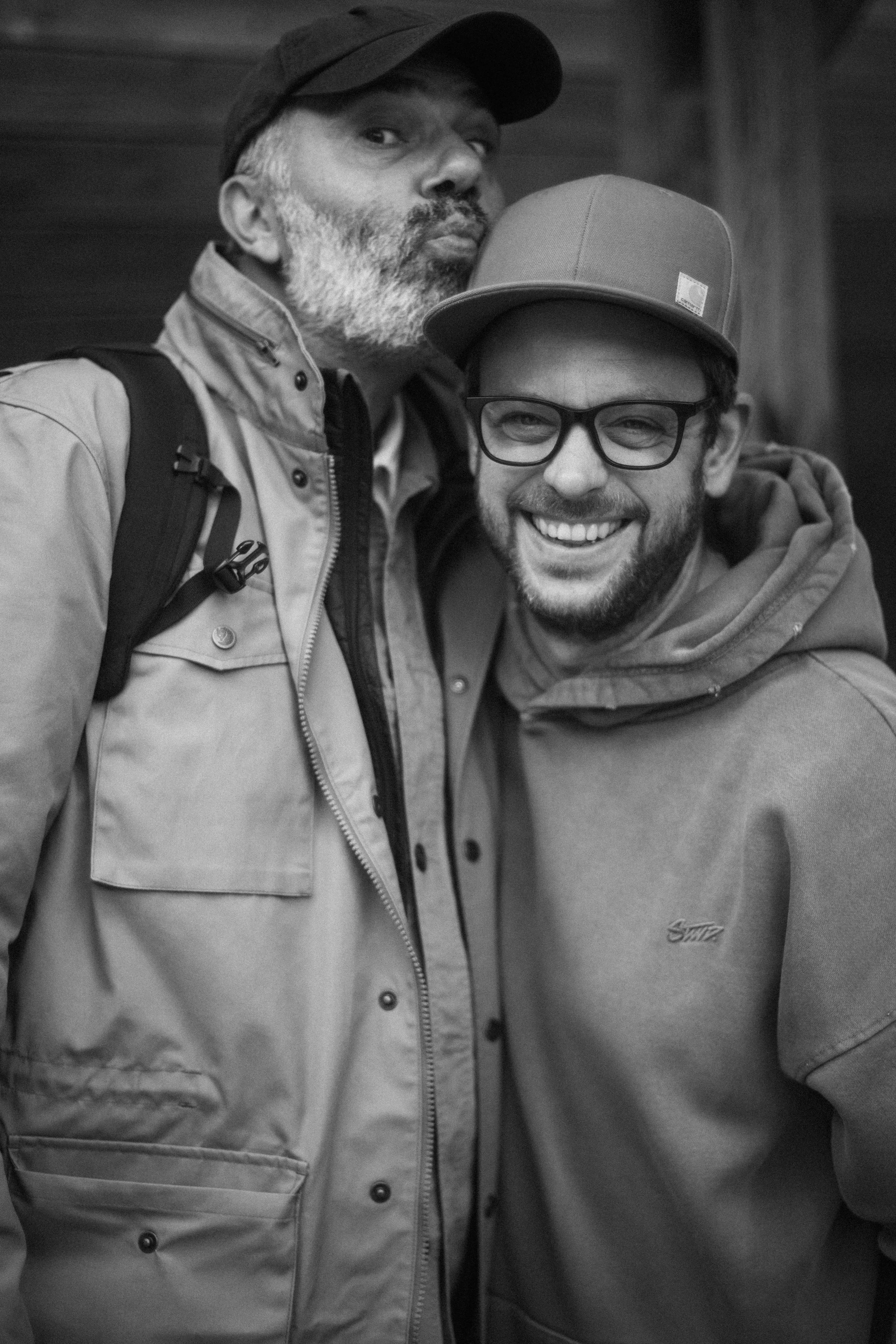
Image: Stefan Magh
Later, we gave workshops together, Intense x Unplugged. We streamed together, talked a lot, took photos, and thought even more about photography.
That one day ten years ago has nevertheless remained.
Because that's how something started back then, the full implications of which I didn't yet understand.
Last weekend, Jan sat in front of me again.
Only this time I was in front.
Jan and his wife Janna are organizing the "Glücksgefühl Fotografie Meetup" (Feeling of Happiness Photography Meetup) in Arzbach.
The base is their location in the heart of nature. It features a restaurant, outdoor area, camping, tables, meadows, a pond, and people who come together for a weekend from different parts of Germany.
Professional photographers and amateur photographers.
Digital and analog.
People who have been photographing for decades, and others who haven't been doing it for very long.
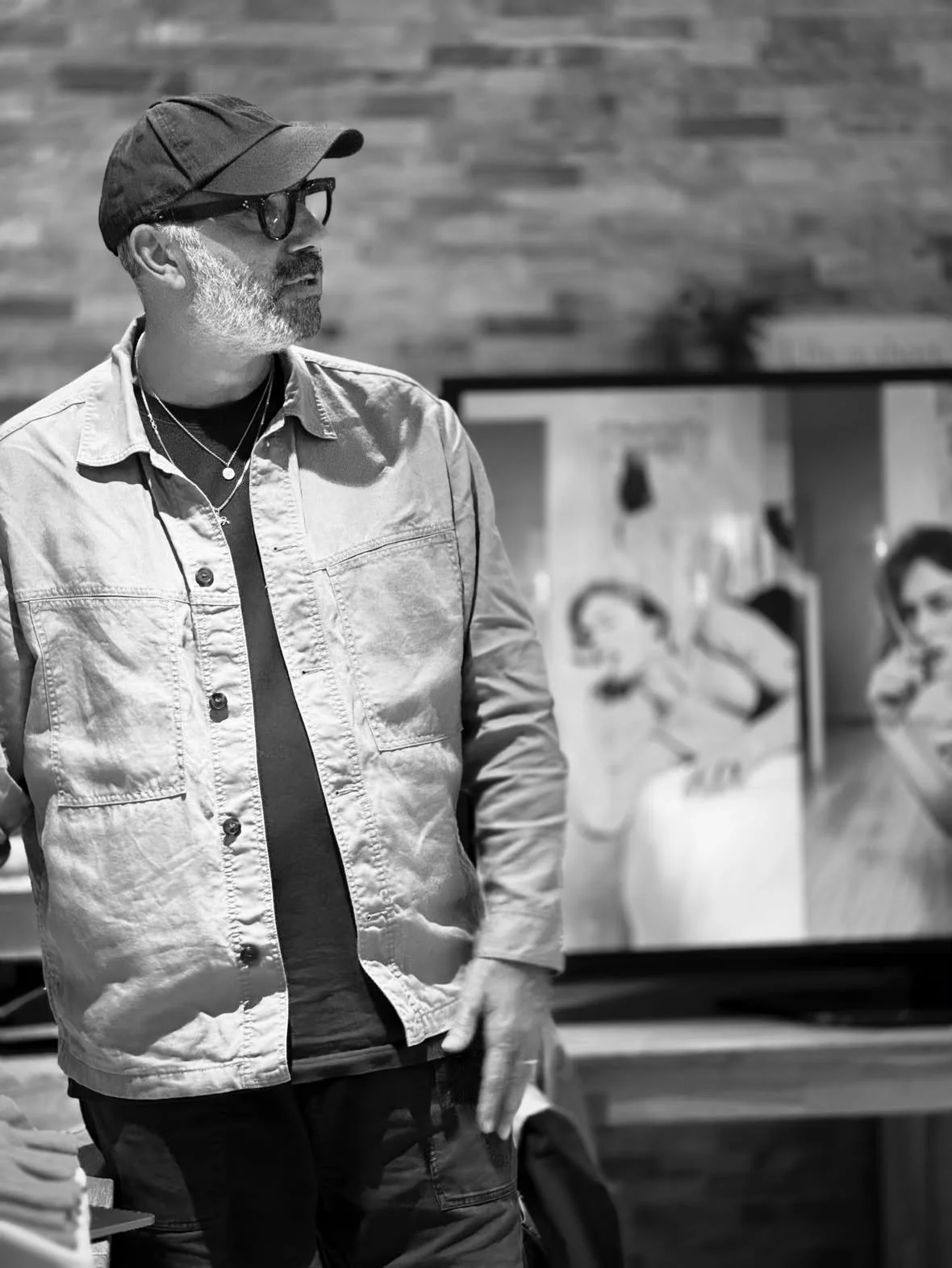
Photo: Jochen Schittenhelm
I knew some of them personally. Others I knew from books. From Instagram. From messages we had exchanged, sometimes for years.
With some people, I only realized halfway through the conversation that we had never introduced ourselves.
We had been sitting next to each other for a while. We talked about pictures, work, life, people. Everything felt completely normal.
At some point I thought: I don't even know his or her name.
Nothing was missing, though.
That's precisely why it was so pleasant.
On Instagram, you often first see the name, the account, the pictures, and sometimes the number of likes and followers, but you don't know the person.
In Arzbach, it was simply the opposite. There were no followers, no digital community. Only the people who were physically present. Everyone else simply stayed outside if they weren't there in person.
During my lecture, there were people in the room whose work I had seen and admired many years ago.
I even bought some of her books because something in them appealed to me.
More than the result, it's the energy behind it. A consequence and their way of seeing and representing it.
Hans-Jürgen Oertelt. Stefan Beutler, for example. Jan. And many others who have worked for many years, traveled, published books, taken on commissions, doubted themselves, and started again.
And now I was standing there and was supposed to tell a story.
I frequently speak in front of people for work. Large rooms don't particularly intimidate me. I speak there about things I believe I know well. I've done this in front of thousands of people by now, sometimes in large settings. Even in the "hallowed halls" of Wetzlar, I don't feel the slightest bit uneasy.
But talking about photography in front of these people is different.
Here I am one of many.
This now reassures me more than it unsettles me.
I don't need to explain to anyone how photography works.
I can only tell you how it worked for me.
And where it stopped working for me.
Part of my presentation is about starting out as a garage band.
You learn a few chords at the beginning.
Eventually, you can play the first songs. Of course, they're the songs you love.
Something similar happens in photography.
You see pictures that inspire you. You become interested in a photographer, a type of light, a certain look, a particular subject.
You try it yourself.
That's just part of it.
Almost everyone starts with cover versions.
You learn the next song. And another. You get better. Eventually, you've mastered a lot of songs by your favorite band.
The crucial question will come later.
Should I learn another song?
Or am I writing my first original story?
It's possible to become a very good cover band.
It's even possible to be successful with it.
That has little to do with finding your own music.
My presentation also covered texts and works that have become important to me in recent years.
About "The last see you later".
To address the idea that we often fail to recognize many last times as they happen.
We say goodbye.
We say: See you later.
We believe there will be a next time.
Later we discover that there wasn't one.
This idea now also relates to photography for me.
I probably took some of these pictures for the last time, without knowing it at the time.
I know the answer for others now.
This is a new insight for me
It also concerns "The moving image".
To create images that are not simply created because something looks interesting in front of the camera.
I am increasingly interested in what happens in front of the picture.
And what remains afterward. How much of a moment fits into a single recording.
A good subject is less sufficient for me today than it used to be.
I want to understand why I'm even standing there.
With this person.
At this location.
At this moment.
At some point, a fairly simple question comes up.
What's the point of all this?
You meet a person.
People spend time together.
You look at him or her.
You take pictures.
Then you go home, select, edit, and publish.
Then you meet the next person.
After ten years, thousands of images are stored on hard drives.
Viewed from this perspective, the whole thing is quite absurd.
The image is not the purpose of the encounter for me.
It's a form of that.
And if the encounter has no meaning, no deeper significance, why take a picture of it?
This thought changes things. For me.
He also explains why some works have become irrelevant to me today, even though they are photographically perfectly fine.
The image works.
The memory of that moment is barely there anymore.
In other images, it's the other way around.
They are not the best technically, but I would never discard them.
We take pictures because we want to see someone.
That's at least part of it.
But we also make them special because we want to be seen in them.
A photographer is not outside the encounter.
He decides where he looks. How close he gets. What he allows. What he blocks out.
This means that every picture also tells something about the person behind the camera.
And sometimes probably more than about the person before.
Your own fingerprint is most likely located right there. Outside of a preset, a focal length, or the composition.
The way you look at a person.
And in what you reveal about yourself in the process.
The weekend in Arzbach was therefore quite pleasant.
Many of the people there reach thousands or tens of thousands via social media.
Your pictures are being seen.
And yet, being seen is something else entirely.
For two days in Arzbach, the world consisted once again of a few tables and a few dozen people.
You could go to a group.
It was possible to stay alone.
You could talk to someone for twenty minutes or for two hours.
Sometimes there was a camera lying on a table somewhere.
Here and there someone was taking photographs.
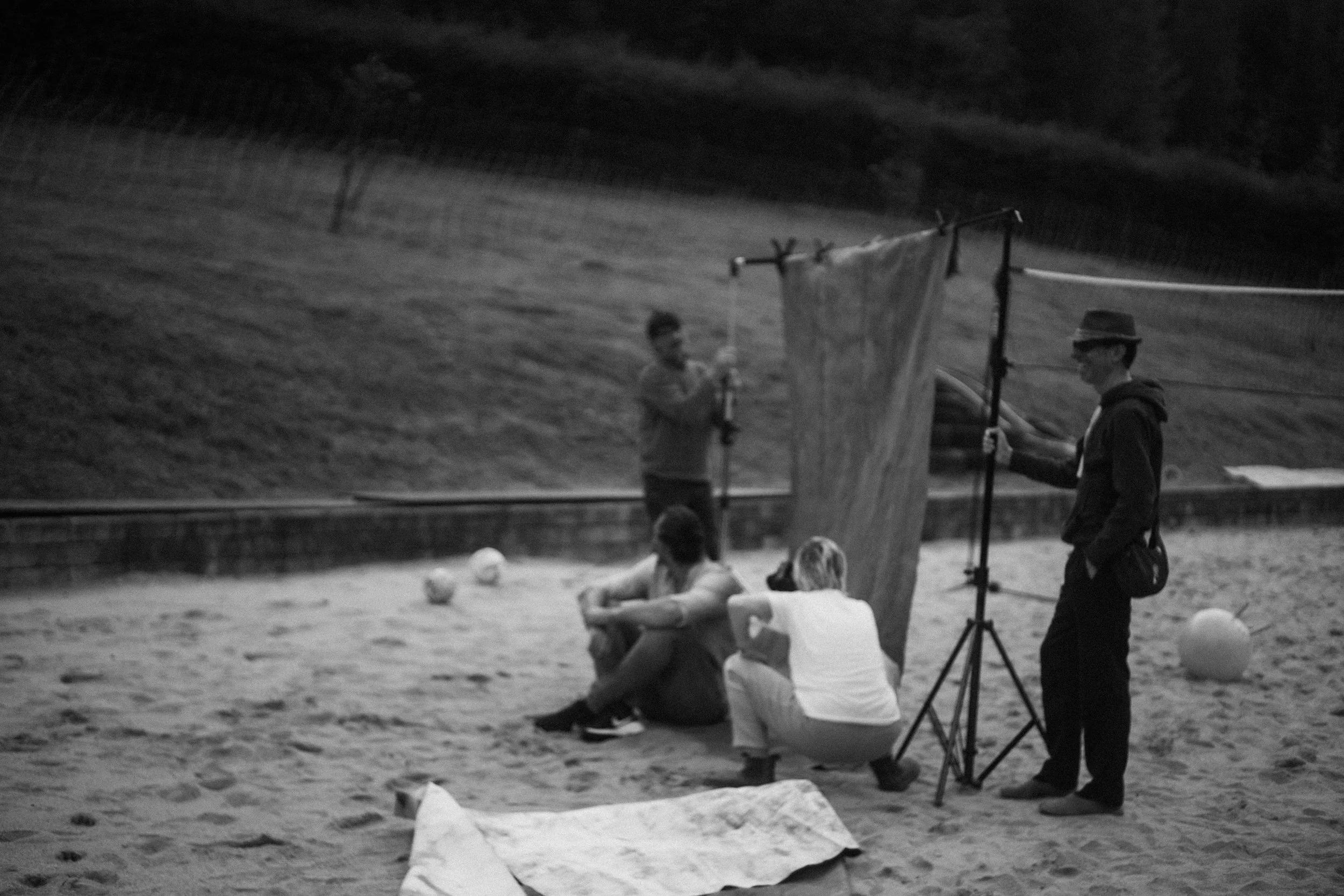
Image: Stefan Magh
A small portrait was created. A personal project. A few pictures with a model.
Others just sat there.
They ate together.
Coffee and breakfast together in the morning - dinner and conversation in the evening.
It started with something personal, but sooner or later it always ended up back with photography.
Nobody had to force it. She was already there anyway.
I read my texts during my presentation.
And I usually like to look at faces while doing that.
This time I couldn't see everyone, but I still felt the attention.
The people in the room listened, and with some I had the impression that they were following their own thoughts more than mine.
And that's exactly what I liked.
Much of what I'm talking about is not new to an experienced photographer.
Doubt is nothing new.
Inspiration is nothing new.
The feeling of repeating oneself is not new.
There's no need to keep your distance either.
You don't have to constantly hear something new.
Sometimes it's enough to have an old question asked again.
Especially after many years.
Sometime on Sunday I packed my things and got on my motorcycle.
Arzbach and the winding roads through the forests were soon behind me.
You can't do much else while riding a motorcycle.
You drive.
You look at the street.
There's still room for the head.
I thought of Jan.
On this day ten years ago.
To the photographers and people I have met since then.
To the people who were sitting in the room and listening to me.
I was also thinking about my pictures.
To those who still mean something to me.
To the many who no longer do it.
And pictures that I will no longer take.
That felt good.
Because something doesn't have to get bad before you're allowed to leave it.
Sometimes, that's all it takes.
The past ten years have stretched to this point.
What comes after doesn't have to be bigger.
No better.
It should just be a little more mine.
On my motorcycle ride towards Frankfurt, I didn't yet know what these pictures would look like.
I don't know that now either.
And for the first time in a while, it doesn't bother me.