

Fragments of Light No. 8: From Black and White to Color – An Expansion in Stages
I photographed in black and white for years.
And then there was a series of images that defied that.
Since then, I've been asking myself: What can color tell us? Why one or the other?
This is my attempt to sort things out for myself.
Not systematically. More tentatively.
An approach in stages.
1. The moment of change
It would have been black and white in the past.
I remember sitting in front of the screen later, going through a series, and suddenly having the feeling: These images can't be forced into my black and white. They wanted to breathe. I know that sounds strange, but that's exactly how it was.
It was the shoot with Sophia. She danced in front of me at the end of the shoot, her auburn hair still radiant, in the late afternoon light, in that large room. George Michael's "Freedom" was playing, and she was no longer "just" a model—she was completely present, in the moment, and immersed in the music. Exuberant. And so different from the hours before. And only later did I understand why these pictures were meant to be something different.
As always, I had shot them in black and white. My camera displays the JPEGs in monochrome; that's my default setting. But the RAW files were there. And suddenly I felt it: This scene, this moment—it was color. It had crept into my photography; as if it had thought, "Okay, now look—this is how you really celebrate!"
For the first time, I felt the need to allow both: I edited the series twice – once in black and white, as usual, and once in color. Not to play around or experiment, but because it would have felt wrong to show these images in only one way. Confining the images to black and white felt wrong. So I edited them twice – in color and in black and white. For the first time, I didn't want to commit to just one.
However, out of a sense of security, I initially only kept the series in black and white.
From then on, I began to ask myself:
Why is my perspective still so strongly rooted in monochrome?
And what can color show that black and white cannot?
Or vice versa?
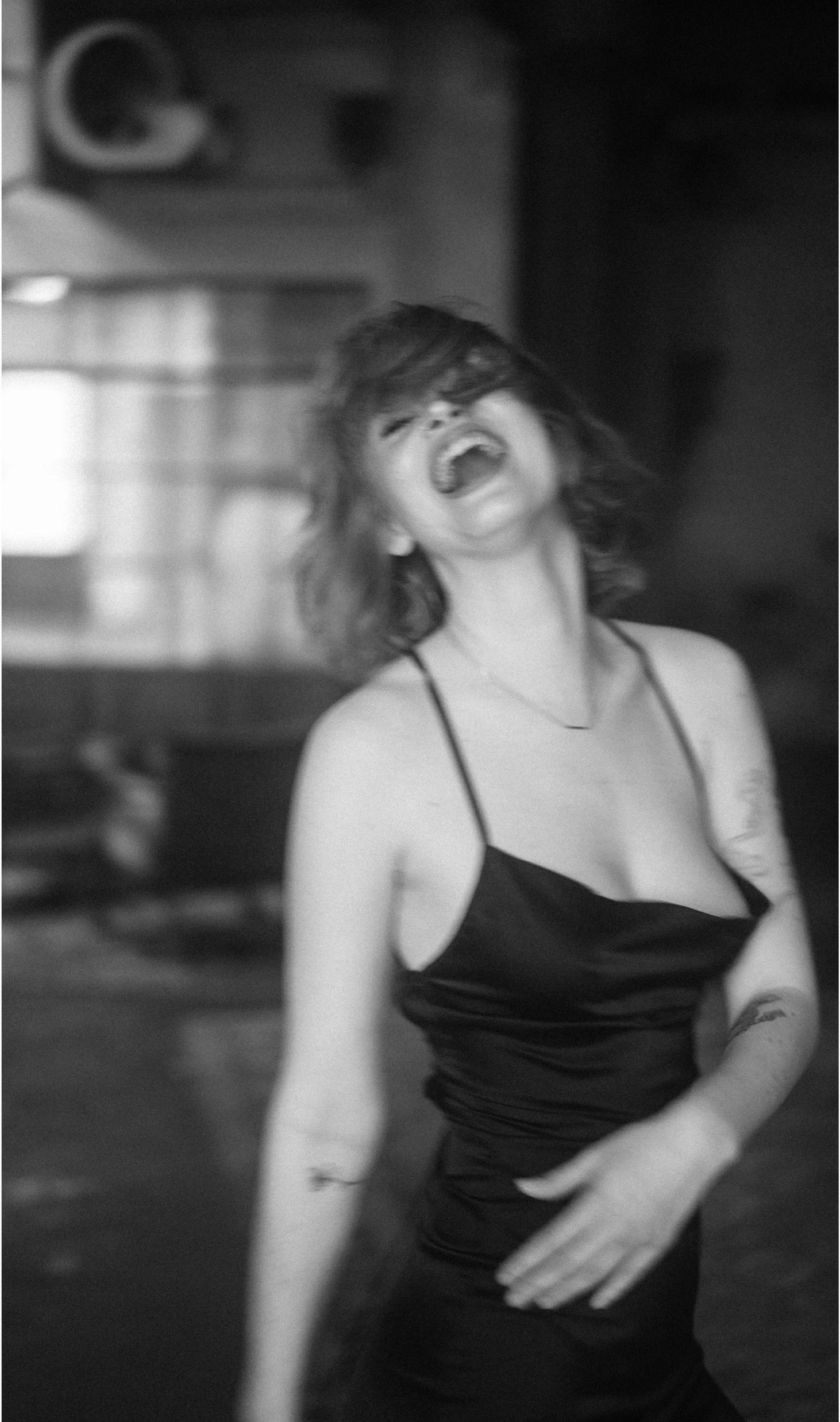
Sophia - Selim Say
2. Black and white was my language – color perhaps my dream
I've often spoken and written about how I came to black and white photography. For example, Dennis Stock and Peter Lindbergh. Later, Annie Leibovitz too – her early work, especially for Rolling Stone magazine, deeply impressed me even as a teenager.
And of course Helmut Newton, whom I will discuss in more detail later.
This reduction, this tranquility that one achieves through black and white – that fascinated me. Shadows as a tool, form through contrast, intimacy through clarity. I could shape my portraits with it as if with a burin.
When I did use color, it was because the look was interesting. Not because I wanted to tell a story. It was more like, "Look, this can work in color too." But my black and white work had a style, a certain character, and bore my signature. It felt disciplined. And more serious.
3. Color as a discovery
I'm old enough to remember our first color television. And also how suddenly even the bad news seemed more entertaining. Everything was suddenly more vivid – much closer to home.
I had a similar experience when I discovered the work of Purienne, Josselin, and Isabel Hayn a few years ago. Later, I also discovered David Hamilton, the visual aesthetics of the 70s, music, and lighting – suddenly I felt: I perceive color photography in a completely different way.
Not technical – but emotional.

Isabel Hayn
At the same time, I had to admit to myself that I never really mastered color. My black and white style was established; it worked. But I couldn't quite capture my vision in color. I thought: you take a picture and then apply a look to it. But it doesn't work that way. For years, I had a "feeling in mind" that my color photographs were meant to reflect. Not just a look—there had to be more to it than just a few color values.
I had to dig deeper.
I had to start seeing things differently.
And that's the real adventure: not the editing. Not the film. But the way I perceive light, atmosphere, and intimacy—I had to learn that first. Relearn it. Color encourages me to let go. Not to control everything. To let things flow instead of clinging to them. Not because I have to. But because I realize that I discover more that way.
4. Newton – the border crosser
Helmut Newton was one of the few who truly mastered both worlds.
His black and white photographs—graphic, physical, minimalist—possessed a tension that seemed carved from stone. The body became architecture. Shadows became contours.
His color photography, on the other hand, was different. Theatrical. Exaggerated. Luxurious, artificial, almost cold. Newton's color was never sentimental—it was deliberately detached. Like stage lighting.

Helmut Newton
I find this shift fascinating. It shows that it's not the technology that creates the image, but the intention. You decide what you want to show – and which medium best tells that story.
In a very similar, but different way, Annie Leibovitz underwent this transformation. Her early black-and-white portraits for Rolling Stone magazine appeared raw, direct, almost casual. They were about intimacy, personality, that one unposed moment. But with the move to Vanity Fair , her visual language changed—not abruptly, but gradually. Color was added, as were staging and narrative space. But the intimacy remained. Color became not decoration, but a vehicle for mood, a layer of meaning, a narrative framework for what lies between the poses.
Both Newton and Leibovitz demonstrate that it's not about questions of style. It's about the conscious decision of how one wants to tell a story – and what the image is allowed to convey.
Looking back, I recognize that in myself as well. I took my first conscious color photographs on film. Analog color. The images were sharper, more progressive – and they had a different atmosphere. Perhaps also more in keeping with the spirit of the times.
5. The cultural significance of black and white
Black and white is considered elegant. Serious. Art.
Fine art. Galleries. Magazines. That's what comes to mind.
And to be honest: I felt very comfortable there for a long time.
But why is that?
Why is the omission of color perceived as artistic, but its inclusion not?
Why does a black and white portrait seem profound, while a color photograph is seen as "commercial" or "popular"?
Perhaps because black and white has always been associated with the past.
With reportage. With the supposedly "true" moment.
But: Color can also have character. Color can also have depth –
if it is not simply used decoratively, but narratively.
6. Color as a new language
If I want to tell stories today, then color simply gives me more possibilities. More nuances. More layers.
It's like in art:
Dürer, Picasso, Michelangelo and his Mona Lisa – they work in color, not in black and white.
Perhaps the relationship can be seen this way:
Black and white is like sculpture – clear, tangible, a play with light, form, and detail.
Color, on the other hand, is painting – flat, soft, and easily blurred.
It depicts less precisely – but it feels more deeply.
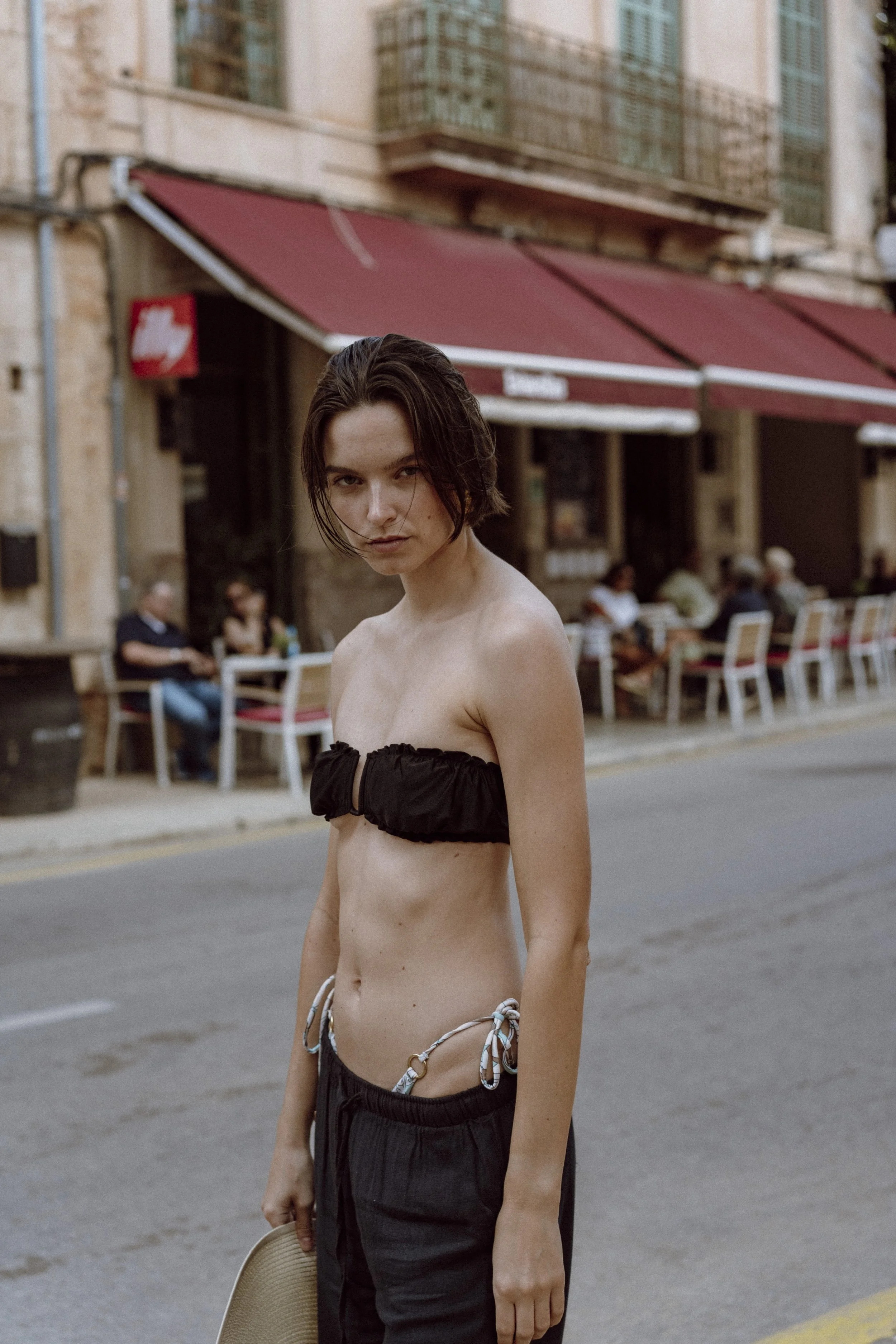
Meggi - Selim Say
While black and white directs and reduces the gaze, color allows it to wander.
Both tell a story. But in different ways.
7. Why I need both today
Black and white remains.
It has a power I love. A line. A clear rhythm.
I use it when I want to focus. When I need structure.
But color opens up spaces.
Color allows for atmosphere.
Color tells a story that cannot always be said – but wants to be felt.
Perhaps I simply had colorful images in my head all these years –
but my language was black and white.
Today I am multilingual.
And perhaps that is precisely the most beautiful part of it:
that I don't yet know in which language my next picture will speak.
I just want to listen to him.