

Method Notes No. 6: Time is the motive
"Nothing is as fleeting as time.
Already gone the moment you think of it."
Nothing is distributed as unequally as time.
For some, hardly any of it remains, for others it seems endless.
Nothing is as omnipresent as time.
For some, it lies far in the past or unattainably ahead;
for others, it envelops the here and now.
In photography, time usually appears starkly, reduced to numbers: one-fortieth, one-hundredth, one-two-hundred-fiftieth. But there's more to this measurability than meets the eye. It's not simply a unit of measurement.
Susan Sontag wrote:
"All photographs are memento mori. To take a photograph is to participate in another person's mortality."
Every image contains something ephemeral – and at the same time a trace of eternity.
My inspiration often comes from the past, from films of the seventies and early eighties, the New American Cinema: One Flew Over the Cuckoo's Nest (1975), Taxi Driver (1976), Deer Hunter (1978), Apocalypse Now (1979) , and so on. It was a cinema that dared to remain imperfect, direct, vulnerable, featuring anti-heroes instead of heroes and realism instead of sensationalism.
But there's another, more subtle source: films with a French influence, like Emmanuelle. Less because of the stories themselves, but more because of their visual language. This 1970s cinema spawned a visual poetics of longing, sensuality, and exoticism —a lifestyle promise set in faraway lands, bathed in soft light and a gentle glow, conjuring an endless summer. The plots were shallow, predictable, and easily forgotten, but the feeling that lingered was one of freedom, adventure, and a timeless elegance. This aesthetic still accompanies me today, almost invisibly woven into my paintings.
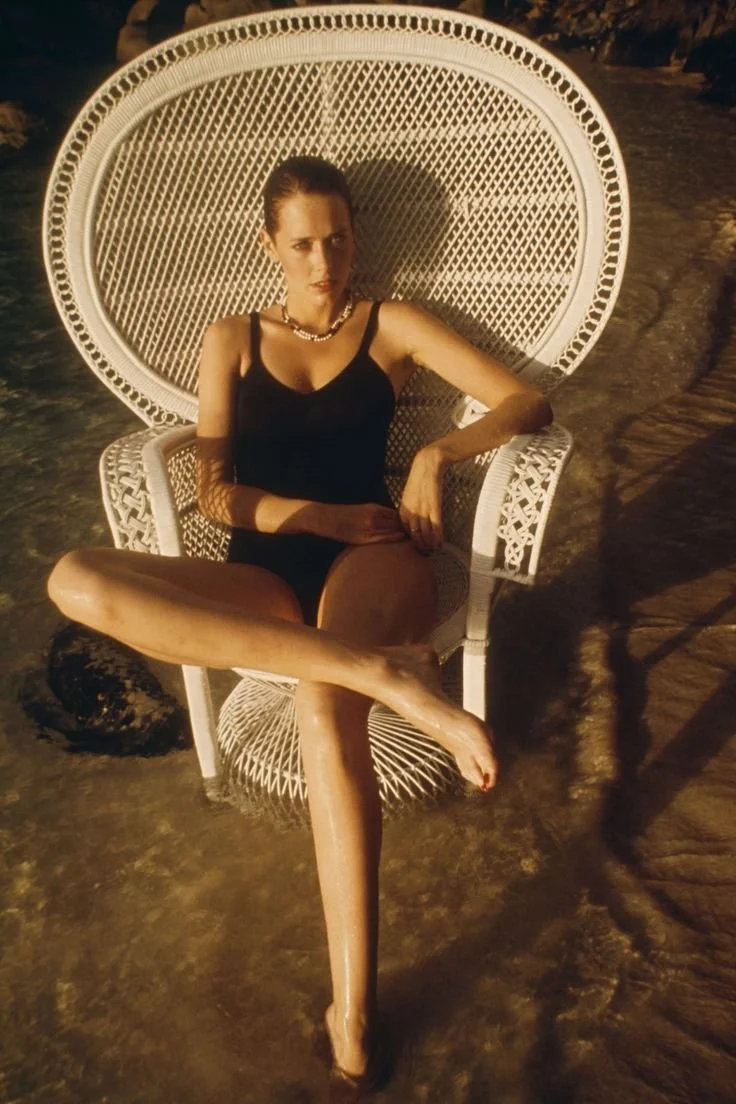
Sylvia Kristel - Emmanuelle
Music has also layered its influence on my work. The years from the mid-eighties to the mid-nineties were my most formative period. Even as a teenager, without a camera in my hand, photographs from that era reached me. Initially accompanied by the music of Sade, Robert Palmer, Brian Ferry/Roxy Music, or Simply Red, and later in the nineties with their own soundscape from Nirvana and Pearl Jam to The Cure and Depeche Mode. Somewhere in between, Oasis and Radiohead. Guiding lights for my photography today.
All these elements find their way into my work. I don't just try to depict a face and create a portrait, but rather capture a snapshot of a scene – like something out of a film. The warm light, the incidental detail, the serendipitous gesture: they bear the traces of that cinematic longing and sensuality that has shaped me. My images are therefore less staged scenes than spaces in which something is allowed to emerge – like a conversation that slowly unfolds and that I capture. I press the pause button.
I remember a shoot in an old Frankfurt loft in late summer, just before sunset. The most special image of the day wasn't taken on the planned set, but during a break, when the model stood barefoot by the window, her hair barely moving in the breeze. A fraction of a second—and yet it captured everything: the tranquility, the nostalgia, a touch of sensuality, a moment of introspection. The echoes of the conversations from the previous hours.
The future also plays a role in my photographs. When I take pictures, I don't just see what's visible in the moment, but also what might be visible in five or fifteen years. I wonder how the image will have aged, what tone it might carry, whether it will radiate nostalgia or the present. This idea guides my gaze: I search for what should remain, even when everything else changes.
That was the case with a portrait series in Istanbul, in the Pera district. While I was photographing, I perceived the place, the time, and the model as something I wanted to preserve in a time capsule, not simply photograph a mood. As a testament to something that would soon be gone, like a scene from Once Upon a Time in America (1984), yet remains timeless.
But not only the past but also the future flows into it. I often drift back to the present – to the small, inconspicuous moments – but I also imagine how time from a decade ago will look back on this scene.
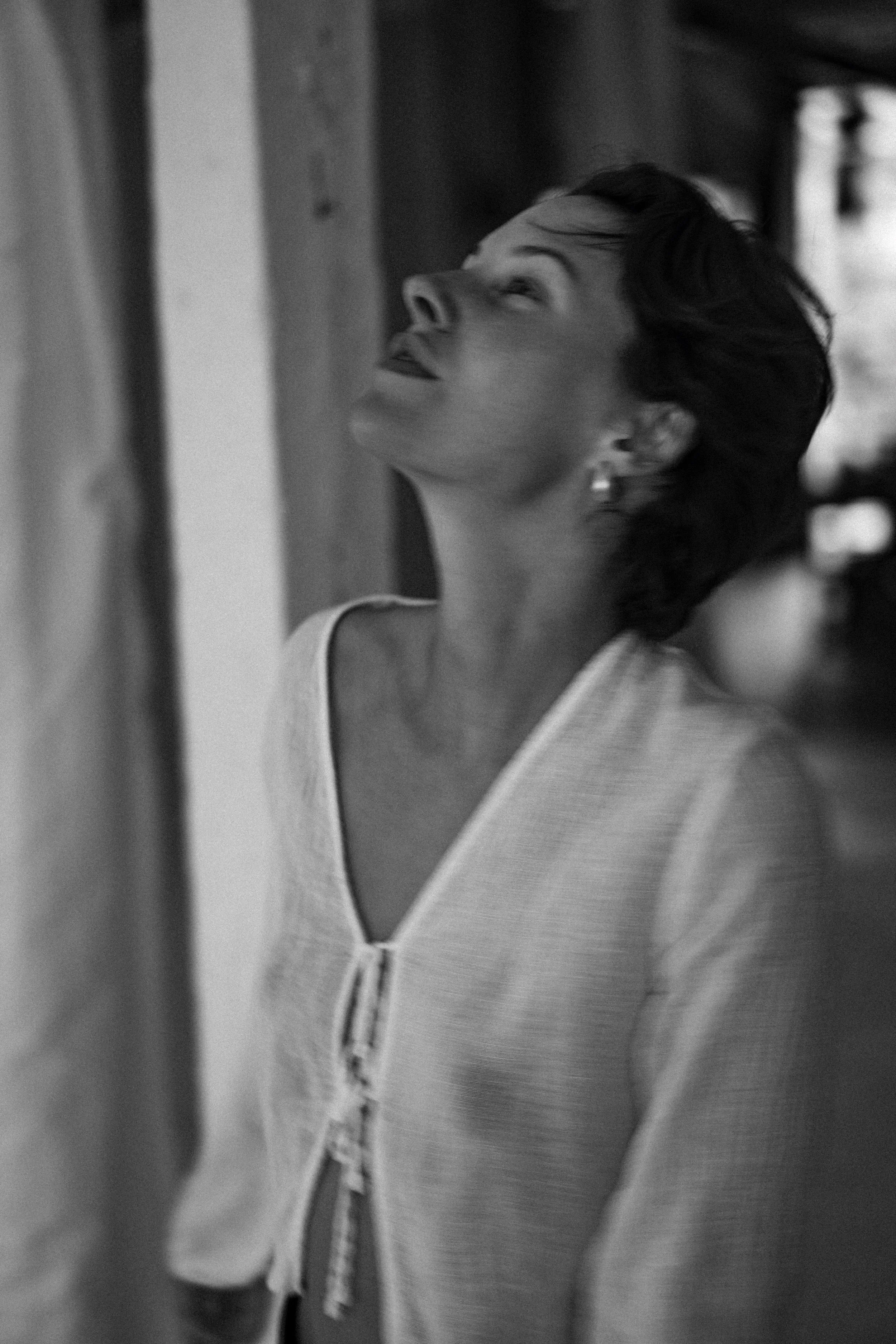
Juliette - August '25
Virginia Woolf wrote:
"Time passes, yes. But time also remains."
Time isn't just chronology; it's also an inner experience. This is precisely what a photoshoot reveals. It's not just about setting up a set, choosing outfits, or giving directions. It's also about everything in between: conversations, pauses, small gestures. Elements that are easily overlooked but crucial for building trust. Without them, a picture remains empty.
I'm thinking of a series of black and white portraits where the real image wasn't the pose, but the moment after a laugh. For a split second, the model lowered her gaze, completely unconsciously. Nothing staged – and precisely for that reason, so genuine.
Everything is condensed – inspirations from old films, memories from youth, projections into the future, the here and now of an encounter – into a fraction of a second. In one two-hundred-and-fiftieth or one hundred and twenty-fifth.
Marcel Proust wrote:
"The real discovery consists not in finding new land, but in having new eyes."
Ultimately, every photograph remains a condensation of time – past, present, and future in a single image. And so, in conclusion, I summarize my idea of time in my photography:
Time is not just the framework in photography. It is its actual subject.